
When securing sensitive data in the cloud, especially in healthcare, the choice between tokenization and encryption is critical. Here's a quick breakdown:
Key Points to Consider:
Quick Comparison
Feature
Tokenization
Encryption
Structured data (e.g., SSN, payment)
Unstructured data (e.g., notes, PDFs)
Simplifies (e.g., HIPAA, PCI DSS)
Requires complex key management
Faster for storage
Slower due to decryption
High (vaultless systems)
Limited by decryption overhead
Strong for stored data
Strong for data in transit
For the best results, assess your data flow, compliance needs, and operational requirements to decide which method - or combination - fits your organization.

Tokenization vs Encryption for Cloud Data Security Comparison
Encryption Vs Tokenization | Difference between Encryption and Tokenization
sbb-itb-535baee
Step 1: Assess Your Data Protection Requirements
Start by understanding the sensitive data your organization handles and how it moves through your systems. This will guide your security decisions and help manage enterprise risk across the organization.
Identify Sensitive Data Categories
Begin by listing all sensitive data your organization manages. For example:
Tokenization is particularly effective for structured data like Social Security numbers and credit card details. It replaces these with non-reversible tokens, which can still be used for analytics but are useless to attackers. This approach is especially helpful for regulatory compliance, such as meeting HIPAA standards [1][2].
Once you’ve identified your data types, trace how they flow through your systems.
Map Data Lifecycle Stages
Track each data category through its lifecycle: storage (data at rest), transmission (data in transit), and processing (data in use) [1]. A data flow diagram can help you pinpoint critical touchpoints, such as:
For maximum security, use tokenization for storage and processing to minimize the risk of breaches. During transmission, encryption protects sensitive data from being intercepted [1]. Mapping these stages ensures you apply the right protection strategies at each step.
Finally, align your data flows with regulatory requirements.
Document Regulatory Requirements
Using your data flow map, outline all relevant regulatory obligations. For example:
Tokenization simplifies compliance by limiting the systems that store actual sensitive data, while encryption offers another layer of protection but requires careful management of encryption keys [1]. By documenting these requirements early, you can ensure compliance without gaps and choose the most efficient protection methods for your needs.
Step 2: Review Compliance and Security Standards
After mapping out your data flow, the next step is to dive into compliance and security requirements. This is where you assess how well tokenization and encryption align with the regulatory frameworks governing your operations.
Check HIPAA Compliance Standards
Both tokenization and encryption can be tailored to meet HIPAA's technical safeguard requirements, but they work in distinct ways. Encryption protects Protected Health Information (PHI) during storage and transmission by using strong key management practices and maintaining audit trails. On the other hand, tokenization replaces PHI with non-sensitive tokens stored securely in a vault. This approach limits the number of systems handling real patient data, simplifying audit processes and reducing risk to patient care.
Once HIPAA compliance is addressed, it’s important to analyze how these methods impact PCI DSS requirements.
Evaluate PCI DSS Scope Reduction
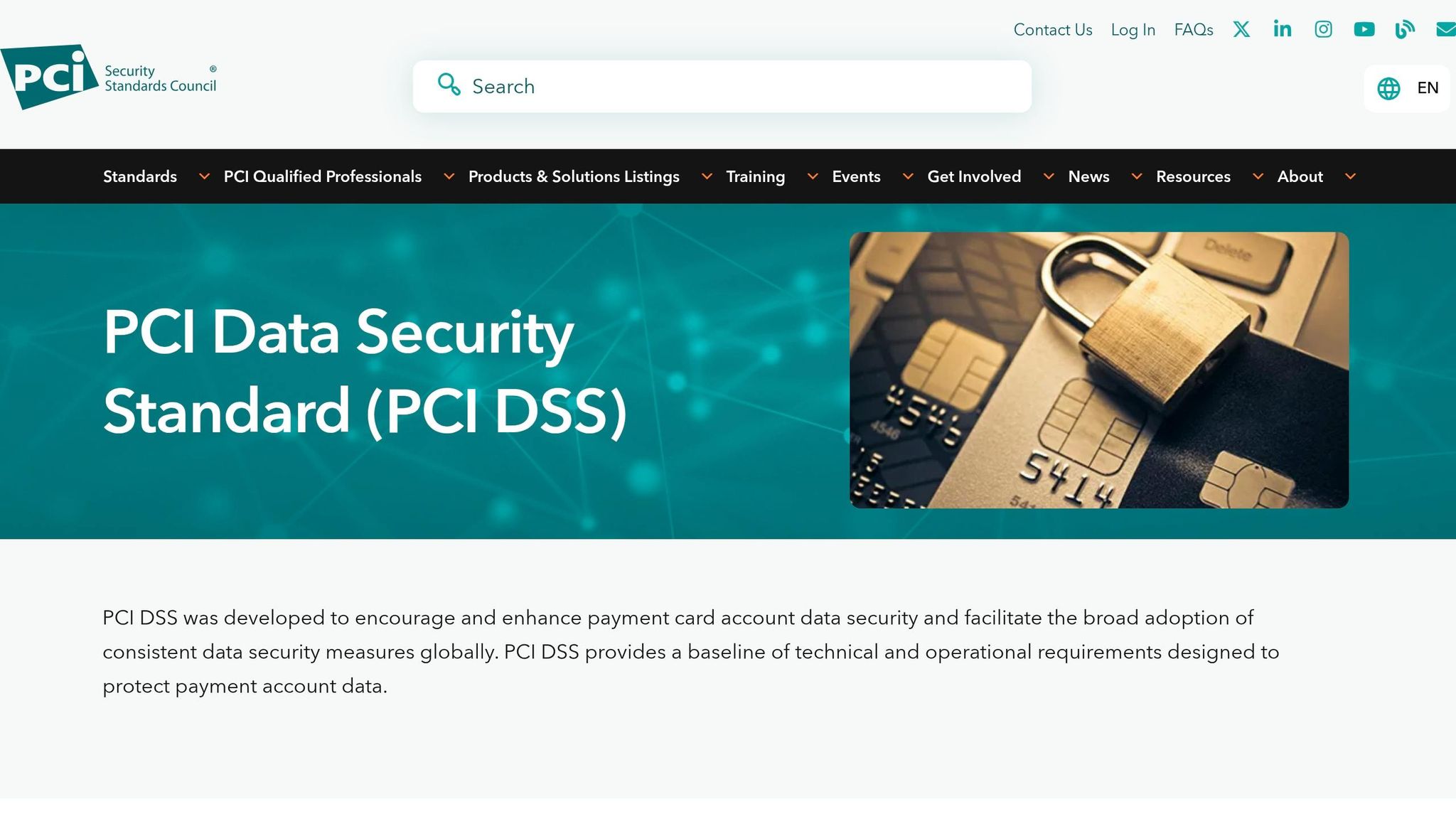
For healthcare organizations handling patient payments, understanding PCI DSS scope is essential. The Cardholder Data Environment (CDE) includes all systems that store, process, or transmit payment card data [5]. Tokenization minimizes this scope by replacing sensitive Primary Account Numbers (PAN) with tokens.
"If the initial entry method can pass the sensitive cardholder data directly to the tokenization service without sending it through the merchant's own infrastructure... the merchant is responsible for securing their components, but the tokenization provider is responsible for the data... eliminating most, if not all, of the security and compliance burden"
.
Encryption, while effective at safeguarding data, keeps systems in scope because encrypted cardholder data is still classified as cardholder data under PCI DSS guidelines [4][6]. In interconnected healthcare networks, insufficient segmentation can expand PCI scope. Tokenization, however, can significantly ease the compliance process. For example, it can simplify a complex Self-Assessment Questionnaire (SAQ-D), which might take weeks to complete, into a much quicker SAQ-A process that can often be finished in just a few days [3]. If your organization uses physical payment terminals, consider PCI-validated Point-to-Point Encryption (P2PE). This method encrypts data at the point of interaction - such as during a card swipe or chip dip - ensuring your organization never has access to decryption keys [5][6].
Next, think about how these methods align with GDPR requirements, especially for cross-border data handling.
Address GDPR and Data Residency Rules
For healthcare providers dealing with patient data from the EU, GDPR compliance adds another layer of complexity. Both tokenization and encryption can satisfy GDPR’s data protection requirements, but tokenization offers specific benefits for data localization. Tokens are meaningless without access to their secure vault, allowing tokenized data to be processed across borders while keeping sensitive information confined to designated geographic locations.
Encryption, by contrast, requires careful key management and comprehensive documentation to demonstrate compliance during cross-border data transfers. Additionally, GDPR’s "right to erasure" is generally easier to fulfill with tokenization - deleting the token from the vault makes the original data irretrievable. It’s also critical to ensure your vendor complies with GDPR's data residency and breach reporting requirements.
Step 3: Compare Tokenization and Encryption Methods
Once you've assessed compliance and data flows, the next step is to evaluate tokenization and encryption. This comparison will help you determine which method aligns best with your operational needs, setting the stage for effective implementation.
Match Methods to Use Cases
Tokenization works by replacing sensitive data with randomized tokens, while encryption converts data into ciphertext that cannot be understood without the proper decryption key.
Tokenization is ideal for structured data, such as Social Security numbers, patient IDs, or payment details. It maintains the original format and structure of the data, ensuring compatibility with downstream systems. For example, a nine-digit SSN will be replaced with a nine-digit token, preventing system failures caused by unexpected data formats. As Protegrity highlights:
"If an application is expecting a nine-digit number and we send a 256‑bit encrypted value, the system will fail"
.
This preservation of structure is critical, especially when researchers have shown that 87% of Americans can be identified using just three pieces of information: zip code, sex, and birthdate [7].
Encryption, on the other hand, is better suited for unstructured data, such as doctor's notes, X-ray images, emails, or PDFs - files that often exceed 1,000 to 2,000 bytes. In these cases, the original format doesn't need to be preserved, making encryption a practical choice.
Once you've matched the methods to your use cases, it's important to examine how each impacts implementation and ongoing maintenance.
Compare Implementation and Maintenance
The complexity of implementing tokenization versus encryption can vary significantly. Tokenization's ability to preserve data format makes it easier to integrate without requiring extensive changes to existing applications. Tokenization gateways can provide real-time protection, streamlining the process.
Encryption, however, comes with the added challenge of key management. To meet regulatory requirements and guard against brute-force attacks, encryption keys must be rotated every one to two years [7]. This creates an ongoing administrative burden. In contrast, vaultless tokenization eliminates the need for key rotation since tokens are generated in a way that is mathematically unrelated to the original data.
From a compliance standpoint, tokenization can reduce the scope of regulations like HIPAA and PCI DSS, as the tokens themselves hold no sensitive value. Encryption does not typically offer this benefit because encrypted data is still considered sensitive under most compliance frameworks.
Beyond these factors, it's essential to consider how each method impacts system performance and scalability.
Analyze Performance and Scalability
Vaultless tokenization relies on small codebooks rather than large lookup tables, giving it an edge in scalability. This makes it particularly effective for large organizations, such as healthcare providers managing millions of records. Additionally, tokenization leaves most enterprise data untouched, avoiding the performance bottlenecks associated with vault-based systems.
Encryption, however, can slow down operations because data must be decrypted before it can be processed. This introduces additional risks, as James Beecham, CEO of ALTR, explains:
"If you're using encryption to protect the data, you must first decrypt it all to make any use of it or any sense of it. And decrypting leads to data risk"
.
Tokenization avoids this issue by allowing authorized users to analyze protected data without exposing the underlying sensitive information.
Another factor to consider is the potential impact of quantum computing. Protegrity notes:
"Randomization is a particularly powerful tool to help future‑proof data security by negating concerns about quantum computing's inherent ability to break key‑based encryption algorithms"
.
This suggests that tokenization, with its randomization-based approach, may provide better protection against emerging threats compared to traditional encryption methods.
Step 4: Plan Your Implementation
Once you've compared methods, it's time to focus on putting your plan into action. This step involves selecting the right vendor, ensuring smooth system integration, and preparing your staff through training.
Choose a Qualified Vendor
When picking a vendor, prioritize those with a strong track record in healthcare. Look for certifications like HIPAA and SOC 2 Type II, as well as documented success in protecting PHI. It's essential that the vendor can handle large volumes of patient data without performance issues, even when processing millions of records.
Key features to look for include HIPAA certification, SOC 2 Type II compliance, scalable token vaults or key management systems, and proven compatibility with clinical platforms like Epic or Cerner. Tools like Censinet RiskOps™ can be a helpful resource for evaluating third-party vendor risks and benchmarking cybersecurity specifically for healthcare organizations that manage sensitive patient data.
Ask for client testimonials to verify the vendor's ability to prevent breaches and support compliance audits. Steer clear of vendors lacking healthcare-specific expertise or those offering solutions that aren't quantum-resistant, as encryption vulnerabilities could become a concern in the future.
Review System Integration Needs
Your chosen solution must work seamlessly with your existing healthcare systems. Tokenization is particularly useful here, as it preserves the original data format (e.g., a nine-digit SSN remains in the same format), avoiding application errors or expensive system rewrites.
Run proof-of-concept tests in real-world conditions to confirm the solution performs well under high-volume usage. Ensure it supports APIs for your EHR systems and handles hybrid environments, whether cloud-based or on-premises. For example, tokenization can replace PHI with tokens in patient records, allowing analytics without exposing sensitive data. This approach also maintains compatibility with SQL databases, ensuring referential integrity and smooth functionality.
Develop Training and Access Controls
Training your team is crucial. Use role-based training tailored to different groups: clinicians should focus on safe PHI handling, while IT teams need to manage token vaults, key rotations, and incident response protocols.
Enforce strict access controls, such as role-based access control (RBAC), multi-factor authentication, and the principle of least privilege. Only authorized personnel should have access to token vaults or decryption keys, and all de-tokenization requests should be logged in detailed audit trails. According to HIPAA reports, organizations with robust training programs have seen PHI breach incidents drop by up to 40%.
Take additional steps like implementing just-in-time access policies and conducting quarterly audits of access logs to maintain compliance. Incorporate simulations of new threats into your training to emphasize how tokenization helps defend against risks like "harvest now, decrypt later" attacks.
Step 5: Consider a Combined Approach
Healthcare organizations often use both tokenization and encryption to strengthen the protection of PHI (Protected Health Information). Instead of relying solely on one method, this layered strategy applies each where it works best - tokenization for stored data and encryption for data in transit. By combining the two, organizations can harness the strengths of each approach, enhancing security while addressing compliance and performance needs.
Use Tokenization for Storage and Encryption for Transmission
A practical way to implement this combined approach is to use tokenization for data stored in the cloud and encryption for data transmission. For instance, hospitals might store Social Security numbers in a tokenized format while encrypting complete patient records sent to insurers or labs. This ensures sensitive data is protected in both storage and transit.
Tokenization is particularly effective for storage because it replaces sensitive data with tokens that are meaningless without access to a secure vault. Even if someone gains access to the database, they cannot reverse the tokens without proper authorization. On the other hand, encryption ensures that data transmitted between systems remains secure, preventing interception or unauthorized access.
This approach also simplifies compliance with HIPAA regulations. Tokenization can limit the scope of audits by isolating sensitive data, while encryption secures data in transit without adding unnecessary complexity to key management processes.
Understand Layered Security Benefits
Beyond storage and transmission, a combined approach provides a stronger defense against cyber threats by creating multiple layers of security.
This strategy also helps address emerging threats. For example, tokenization mitigates risks from "harvest now, decrypt later" attacks, where attackers collect encrypted data today in hopes of breaking encryption in the future. Since tokens are not encrypted data but random substitutes, this type of attack does not apply. Additionally, tokenization allows healthcare teams to perform analytics on sensitive data without decrypting it, keeping the original data secure.
To implement this layered approach effectively, start by identifying which types of PHI should be tokenized - such as structured data like patient IDs or medical record numbers - and which transmissions require encryption, such as API calls or data exchanges between facilities. Test the system in a staging environment that mimics real-world conditions to ensure it operates smoothly. Monitor access logs and performance metrics to confirm that tokenization and encryption work together without causing delays or bottlenecks. Integrate these methods with the compliance measures and SOC 2 requirements discussed earlier to create a comprehensive and secure data protection strategy.
Conclusion
Tokenization and encryption work hand-in-hand to strengthen data security, but the key is aligning these methods with your specific regulatory and operational needs. In 2023 alone, over 133 million records were exposed due to hacking and unauthorized access [11]. This stark figure highlights just how critical it is to safeguard protected health information (PHI).
The checklist provided here offers a clear starting point: identify the data that needs protection, map its flow through your systems, and choose the right protection method for each scenario. For instance, encryption is ideal for clinical data that needs to be readable and processable in its original form, such as patient notes or diagnostic reports. On the other hand, tokenization is better suited for securing data that must remain referenced but unrevealed - like Social Security or medical ID numbers. Striking this balance is vital, as regulatory guidance emphasizes:
"Encryption significantly reduces the probability of unauthorized disclosure, making it a preferred safeguard when storing or transmitting PHI." – HHS Guidance
Most healthcare organizations will find that combining these approaches offers the best defense. This dual strategy not only mitigates current risks but also addresses emerging challenges, including the potential threats posed by quantum computing - a concern that security teams are already starting to tackle [9].
To maintain a strong data protection framework, it's essential to implement patient data protection best practices, separate key management from data storage, and conduct regular audits. For example, monthly system checks and quarterly reviews of access permissions can help ensure compliance and security [10]. By tailoring these practices to your organization's needs, you can meet HIPAA requirements while enabling efficient healthcare operations.
At Censinet, we offer cybersecurity and risk management solutions designed to help healthcare organizations implement these strategies effectively.
FAQs
When should we use tokenization instead of encryption?
Tokenization works well for structured data, such as Social Security numbers or medical record numbers. It replaces this sensitive information with random tokens, which are securely stored in a protected vault. This approach reduces the impact of breaches and helps ease compliance challenges. It's an effective way to limit the risks associated with data exposure.
On the other hand, encryption is more suited for unstructured data, like clinical notes or images. However, its effectiveness heavily relies on robust key management. If encryption keys are compromised, the data could still be exposed, emphasizing the importance of securing those keys.
How does tokenization reduce HIPAA or PCI DSS audit scope?
Tokenization helps reduce the scope of HIPAA or PCI DSS audits by swapping sensitive data with non-sensitive tokens. These tokens are stored securely in a vault and hold no value on their own without access to that vault. This approach lightens the compliance load on systems while also decreasing the chances of data breaches.
What do we need to manage for encryption keys in the cloud?
To keep encryption keys safe in the cloud, healthcare organizations need to follow strict practices. This includes storing keys separately from the encrypted data, automating key rotation to reduce risks, and using role-based controls to limit access. Another highly recommended step is using hardware security modules (HSMs), which provide a secure way to store keys.
By managing encryption keys effectively, organizations can protect sensitive data and meet compliance requirements under HIPAA and NIST guidelines. This approach helps prevent unauthorized access and ensures that critical information stays secure.
