
Healthcare AI use is outpacing control. 84% of organizations have AI governance committees, but only 12% have a formal framework. That gap leaves too much to chance.
If I had to boil the article down to one point, it’s this: healthcare AI governance works best as a stack, not a single rulebook. I’d use:
- NIST AI RMF to set the risk process
- ISO/IEC 42001 to turn that process into a documented management system
- HITRUST or HIPAA-aligned controls to deal with PHI, security, and vendor duties
That stack gives you a plain path for:
- intake before deployment
- clear approval and pause rights
- vendor review for PHI use and model details
- monitoring after go-live
- audit records and incident response
The article’s main message is simple: a committee alone is not enough. Named owners, written approval paths, vendor checks, and monitoring rules are what turn AI governance into something people can use day to day.
Here’s the quick comparison:
| Standard | Main job | What it adds |
|---|---|---|
| NIST AI RMF | Risk process | Shared steps for govern, map, measure, and manage |
| ISO/IEC 42001 | Management system | Roles, policy, review cycles, and audit structure |
| HITRUST / HIPAA-aligned controls | Privacy and security | PHI controls, vendor duties, and healthcare compliance ties |
I’d summarize the article this way: start with ownership, apply the standards stack across the AI lifecycle, and connect it to real workflows for intake, vendor review, monitoring, and response.
Establishing an AI Governance Framework
sbb-itb-535baee
The Standards That Can Bring Discipline to Healthcare AI Governance

Healthcare AI Governance Standards Stack: NIST vs ISO 42001 vs HITRUST
The answer isn't one rulebook. It's a standards stack.
Healthcare AI sits under several layers of oversight, including FDA, ONC, HIPAA, and state rules. That makes a stack-based approach the most practical way to govern it.[1][5]
NIST AI RMF as the Risk Management Backbone
The NIST AI Risk Management Framework is the broadest place to start. Its four functions - Govern, Map, Measure, and Manage - give healthcare teams a shared language and a clear process that works across the full AI lifecycle.
Govern comes first for a reason. This is where an organization sets decision rights, risk tolerance, and escalation authority. If that groundwork isn't in place, the other three functions can surface issues, but there's no clear path for what happens next.
Use NIST AI RMF as the working framework for risk and trustworthiness. Then use ISO/IEC 42001 to make that work auditable and repeatable.
ISO/IEC 42001 as the AI Management System Standard
Where NIST lays out the risk process, ISO/IEC 42001 provides the organizational infrastructure. It sets formal requirements for an AI Management System, or AIMS, including leadership accountability, written policy, defined roles, operational planning, performance evaluation, and continual improvement cycles.
Put simply, NIST defines the process. ISO/IEC 42001 builds the management system that keeps that process in motion.
That matters because governance can't be a one-time exercise. It has to keep running in the background, with clear ownership and regular review. ISO/IEC 42001 helps turn NIST from a framework on paper into an ongoing program. It's also certifiable, which matters for organizations that need to show governance maturity.
HITRUST and HIPAA-Aligned Controls for PHI, Security, and Compliance
Healthcare also has a problem that general AI frameworks don't fully spell out: PHI, security, and third-party AI risk controls.[1] That's where HITRUST and HIPAA-aligned controls come in.
They tie AI governance to the specific duties that apply any time PHI is involved. In other words, they connect AI oversight to the day-to-day compliance work healthcare organizations already have to manage.
HITRUST r2 includes AI risk management mappings tied to the NIST AI RMF.[1]
Taken together, these three frameworks cover what no single standard can handle on its own:
- NIST AI RMF for the risk process
- ISO/IEC 42001 for management discipline
- HITRUST / HIPAA-aligned controls for healthcare security and privacy requirements
| Framework | Primary Role | Enforcement |
|---|---|---|
| NIST AI RMF | Risk management process (Govern, Map, Measure, Manage) | Voluntary |
| ISO/IEC 42001 | AI management system structure and continual improvement | Certifiable |
| HITRUST / HIPAA-aligned controls | PHI protection, security controls, third-party vendor risk management | HIPAA-required or contract-enforced |
Together, these standards define the control layer. The next step is to embed them into intake, validation, and monitoring workflows.
How to Apply These Standards Across the AI Lifecycle
Knowing which standards apply is only half the job. The harder part is putting them into the day-to-day choices your teams make: who signs off on a new model, what a vendor has to share, and what sets off a pause or retirement.
Once you define your standards stack, the next move is to build it into intake, vendor review, and monitoring.
Governance Structure, Model Intake, and Validation
Start with ownership. An AI oversight committee should include clinical, security, privacy, compliance, legal, and operations. And it can't just be a box-checking group. It needs real power to approve, delay, or block deployments. Decision rights should be spelled out in plain terms: who can approve a model, who can pause it, and who can retire it.
Every AI system entering your environment should go through a documented intake process before deployment. That process should capture intended use, patient impact, workflow placement, whether a human must review outputs before action, dataset provenance, limitations, and validation thresholds.
That same intake discipline should extend into vendor review.
Third-Party AI Vendors, PHI Use, and Bias Controls
Third-party vendors create the toughest accountability problem because the model's inner workings are often hard to see, while your organization still carries the risk.
Vendor review should require:
- Standardized questionnaires
- Model lineage and dependencies
- Contract terms that assign accountability for model behavior [4][2]
Any vendor with access to PHI needs a Business Associate Agreement that spells out how training data is handled. De-identification through Safe Harbor or Expert Determination methods can give teams room for model training while staying inside HIPAA boundaries [3].
PHI isn't the only concern. Vendors should also provide bias assessments, including demographic performance comparisons and subgroup stratification that show how the model performs across race, age, sex, and other patient traits that matter [3][2]. Explainability outputs, such as feature-importance scores or imaging heatmaps, can help support clinical review. And the decision criteria for acceptable risk should be documented before a vendor is approved, not after the fact.
Once a vendor is approved, monitoring and incident response need to start before go-live.
Monitoring, Incident Response, and Auditable Records
Deployment is not the finish line. The NIST AI RMF's MANAGE function calls for active risk treatment. In plain English, that means acting on monitoring signals before harm happens, not after [2]. Define performance thresholds, reporting frequency, and stop conditions before a system goes live.
Your documentation library also needs to stand up to audit. That includes governance charters, incident intervention records, source-attribute logs required by ONC HTI-1, and SBOMs [1]. If something goes wrong, AI-specific incident response procedures should lay out escalation paths and make clear who has the authority to pause or retire a model [2]. Those procedures should also connect with existing incident response and monitoring tools [6]. Without clear authority, a program may spot risk and still fail to stop it.
Building a Standardized AI Governance Program with Censinet
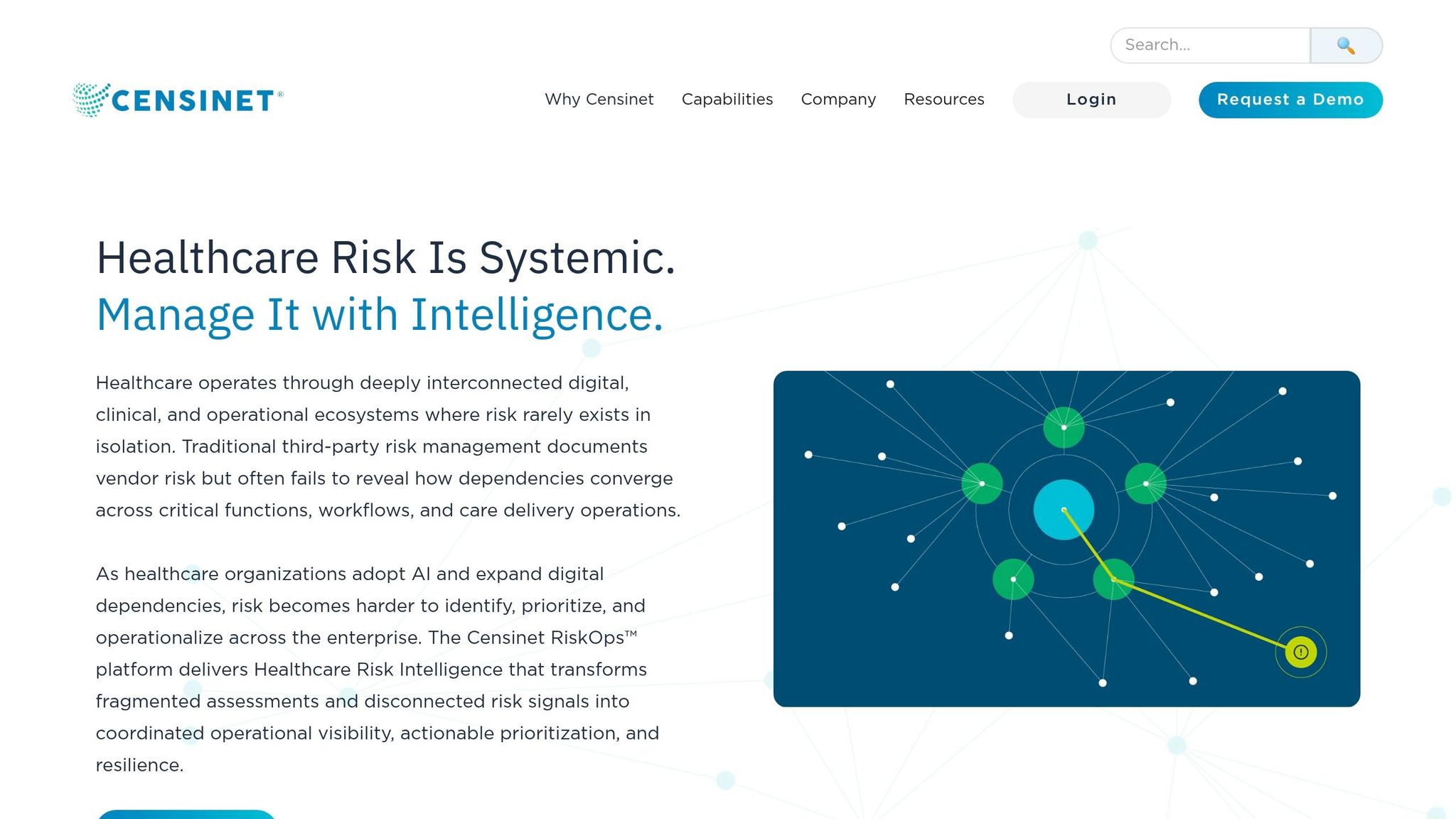
Once the standards stack is set, the next job is putting it to work. Censinet RiskOps™ helps healthcare teams move AI governance from policy on paper to a process people can actually run again and again.
Mapping NIST AI RMF, ISO/IEC 42001, and HITRUST or HIPAA Controls into Workflows
Censinet RiskOps™ puts AI governance into repeatable assessments, control mappings, and audit-ready workflows. Every AI system - whether it's an in-house clinical decision tool or a third-party admin automation product - moves through the same review path. That consistency matters. It means teams aren't making up the process as they go.
Control mappings connect straight to NIST's GOVERN, MAP, MEASURE, and MANAGE functions, which helps close the gap between policy and approval [2]. For organizations working toward HITRUST r2 certification, direct mappings to the NIST AI RMF can line up security, privacy, and AI governance in one audit cycle [1].
The workflow should also pull in AI tools that haven't been reviewed yet before they spread into clinical use. A structured scan for unreviewed AI tools ("shadow AI") brings them into a formal inventory. Put simply, it gives teams a clear way to spot unreviewed AI and bring it under governance.
Using Censinet One™, Censinet Connect™, and Censinet AI™ for Oversight
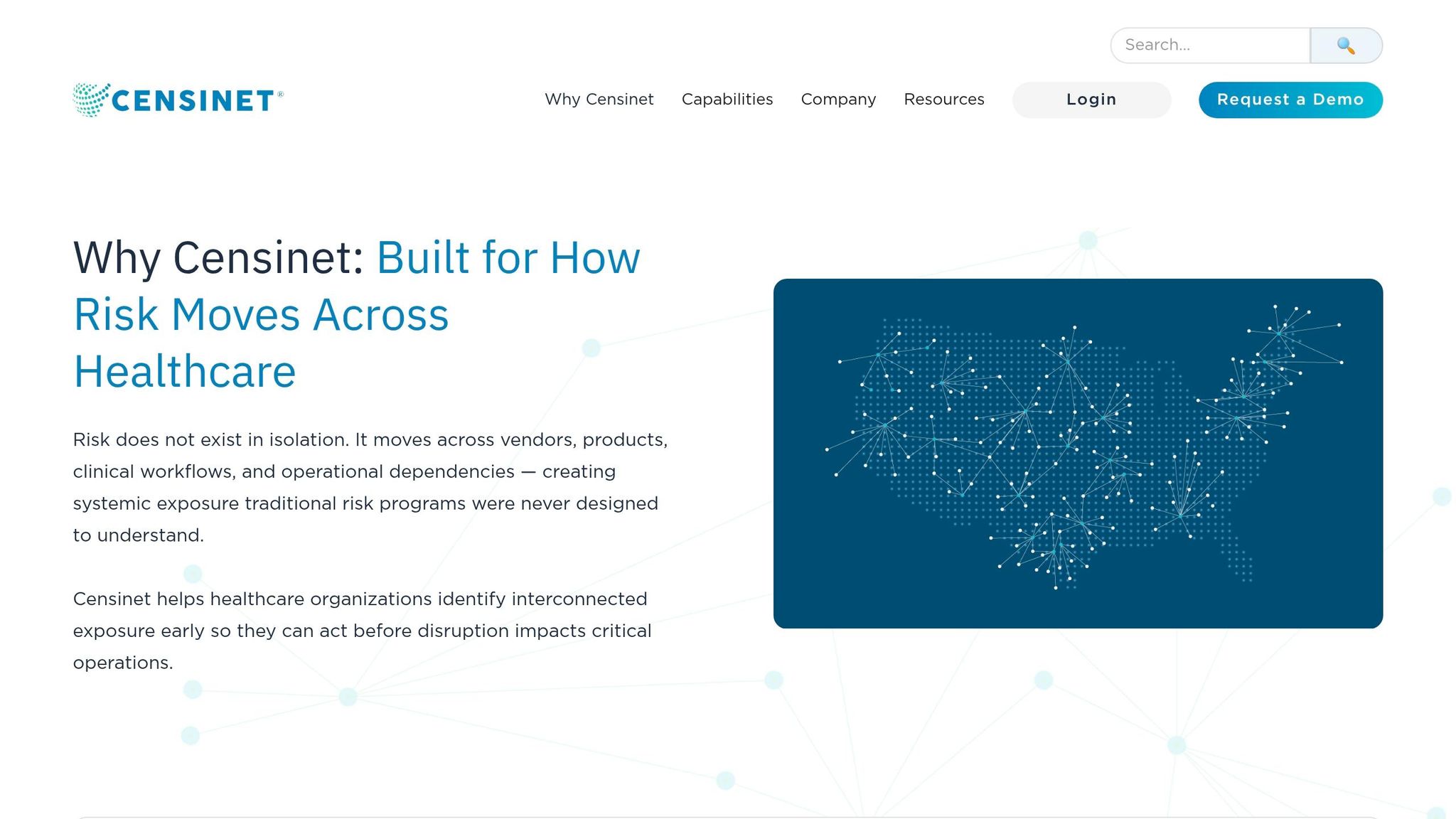
Censinet One™ and Censinet Connect™ help teams assess vendors at scale. Third-party AI vendors fill out standardized questionnaires that cover security, PHI handling, bias assessments, and other governance inputs. That keeps the review process consistent across both clinical and operational use cases.
Censinet AI™ speeds up review by automating questionnaire completion, summarizing vendor evidence and documentation, writing risk summary reports, and routing key findings and tasks to the right stakeholders. In practice, that gives teams one place to manage AI governance. Human reviewers still keep approval authority through configurable review rules, so automation supports decisions instead of making them on its own. The result is a single dashboard for policies, risks, evidence, and tasks.
Built-in checkpoints keep approvals, evidence, and follow-up aligned. That creates one clear path from intake to review to action.
Conclusion: A Practical Roadmap for Hospitals, Payers, and Digital Health Organizations
84% of healthcare organizations have AI governance committees, but only 12% have a formal framework [1]. That gap is where patient safety risk and regulatory exposure show up.
The most workable path has three layers: NIST AI RMF for day-to-day operations, ISO/IEC 42001 for audit readiness and external assurance, and HITRUST or HIPAA-aligned controls for privacy and security. These don’t replace each other. They fit together.
From there, rollout should follow a clear order. Start with inventory and gap analysis. Then update policies. After that, put monitoring and technical controls in place. Next comes audit readiness.
It all begins with one control point: ownership. Put named owners and escalation paths in place before any deployment. That’s what drives intake, validation, vendor review, and monitoring [2]. Oversight should match risk. A clinical risk stratification model needs tighter review than an administrative natural language tool [2].
Map regulatory obligations early to avoid remediation, contract changes, and delayed deployment [5].
Hospitals should tie governance to PHI protection and patient safety controls. Payers should focus on prior authorization automation and revenue cycle management, with alignment to URAC/NCQA AI standards [1]. Digital health organizations licensing AI to European entities should plan for EU AI Act compliance and Colorado AI Act impact assessments for high-risk AI used in healthcare, both of which are already in effect [1].
FAQs
Which standard should we start with first?
For most U.S. healthcare organizations, the NIST AI Risk Management Framework (AI RMF) is the best place to start. It’s faster to put into practice, gives teams a shared language for AI risk, and shows up more and more in U.S. legislation and federal guidance.
Once that base is set, ISO/IEC 42001 makes sense as the next step. It helps organizations build a certifiable management system and show stronger governance to outside stakeholders.
How do these standards apply to third-party AI vendors?
Standards like the NIST AI RMF, ISO/IEC 42001, and HSCC guidance push third-party AI oversight past static self-attestations and toward continuous, evidence-based assurance.
For healthcare organizations, that means looking past basic security questionnaires. A vendor might check the right boxes on paper and still leave big gaps in practice.
Instead, teams should verify things like:
- data lineage
- model explainability
- bias testing
- vendor accountability
- embedded third-party dependencies
The aim is ongoing monitoring, not a once-a-year review.
What should trigger an AI model pause or retirement?
An AI model should be paused or retired when its risks outweigh its benefits.
That usually happens when the model starts acting outside its intended limits, when model drift lowers accuracy, when performance falls short of vendor promises, or when algorithm changes materially hurt safety, intended use, or clinical workflow.
Just as important, someone inside the organization needs clear, written authority to make that call and act on it.
