
AI is reshaping healthcare but introduces serious risks, especially around HIPAA compliance. Key concerns include data breaches, re-identification of anonymized data, and misuse of patient information. With healthcare data breaches affecting over half the U.S. population in 2024 and HIPAA violation penalties exceeding $2 million annually by 2025, the stakes are high. Many organizations lack proper AI oversight and risk management, with only 31% actively monitoring systems and nearly 50% without formal approval processes.
To manage these risks:
- Limit AI access to only the necessary data (Minimum Necessary Standard).
- Prevent re-identification of de-identified data through advanced safeguards like differential privacy.
- Use multi-factor authentication (MFA) and detailed audit trails to track AI interactions.
- Avoid using consumer-grade AI tools like ChatGPT without proper agreements to protect patient data.
- Implement human review for AI-generated outputs and ensure compliance with updated HIPAA rules, including mandatory AI-specific risk assessments by 2026.
The regulatory landscape is tightening, with new federal and state laws requiring AI oversight, stricter data controls, and comprehensive logging. Staying compliant means adopting robust governance, updating agreements, and continuously monitoring AI systems to safeguard patient data.

AI Risk Management for HIPAA Compliance: Key Statistics and Requirements 2025-2026
HIPAA and AI: What Healthcare Needs to Know in 2025 | InfoSec Battlefield Ep. 5
sbb-itb-535baee
HIPAA Privacy Rule Requirements for AI Systems
The HIPAA Privacy Rule outlines three core requirements for AI systems handling Protected Health Information (PHI): limiting data access to the minimum necessary, preventing re-identification of de-identified data, and maintaining strict access controls and audit trails. While these rules have been around for decades, AI's capabilities introduce new challenges that make compliance more intricate compared to traditional healthcare IT systems.
Minimum Necessary Standard
The Minimum Necessary Standard mandates that covered entities restrict PHI access, use, and disclosure to only what’s essential for a specific purpose. For AI tools, this means a transcription system, for example, should only access audio recordings rather than a patient’s entire medical history [6]. However, AI - especially Large Language Models - often relies on analyzing patterns across vast datasets, making it tricky to limit access to just the required data [6].
Some vendors argue that full chart access is necessary to provide context, but without clear justification or patient consent, this violates the Minimum Necessary Standard [6]. As Davia Ward, CEO of Healthcare Partners Consulting & Billing, puts it:
"Compliance isn't just about encryption and business associate agreements anymore; it's about granular data governance that ensures AI systems only touch the specific information they need for their designated function." [6]
Unauthorized use of consumer-grade tools, often referred to as Shadow AI, poses additional risks. For instance, staff using public platforms like ChatGPT or Claude to summarize notes without proper Business Associate Agreements could inadvertently breach HIPAA regulations [4]. Moreover, using PHI to train commercial AI models might be classified as a "sale of PHI" if the entity benefits financially or receives free services, requiring explicit patient authorization [4][1]. To address these issues, organizations can implement field-level controls. For example, billing AI tools should never access psychotherapy notes [6]. These access limitations tie directly into the risks associated with AI's ability to re-identify de-identified data.
De-Identification and Re-Identification Risks
Beyond limiting access, ensuring patient privacy also involves robust de-identification practices. HIPAA provides two methods - Safe Harbor and Expert Determination - to protect data. However, AI systems can sometimes bypass these safeguards using the Mosaic Effect, which involves cross-referencing de-identified data with publicly available datasets like social media or property records [4][8][1].
For example, a combination of date of birth, sex, and 5-digit ZIP code uniquely identifies over 50% of U.S. residents, whereas using year of birth, sex, and a 3-digit ZIP code reduces that figure to just 0.04% [8]. This highlights the importance of Safe Harbor’s strict removal requirements but also shows why these measures alone may not suffice against AI-powered re-identification attempts.
Another concern is model memorization. Large Language Models can memorize PHI from training datasets and potentially reproduce it verbatim when queried with specific prompts, creating a risk of HIPAA violations [1]. To mitigate this, organizations can use redaction proxies to strip PHI from data before it’s processed by AI, re-inserting it locally into responses to ensure the AI never directly interacts with sensitive information [1]. Differential privacy techniques during model training or fine-tuning can also help minimize the risk of extracting individual patient data from the model’s memory [1]. These safeguards, combined with access controls, are key to managing AI under HIPAA.
Access Controls and Audit Trails
HIPAA mandates that every user of an AI system have unique credentials to ensure accountability, prohibiting shared accounts [1]. Under the 2026 modernization rules, multi-factor authentication (MFA) is now required for all systems accessing PHI, including AI tools and single sign-on interfaces [9][7].
AI systems also demand more detailed logging than traditional systems. For instance, they must include inference-level logging, capturing details like prompts, context windows, generated outputs, model versions, and configuration parameters [1][9]. As the GLACIS compliance guide states:
"Compliance documentation isn't proof. Evidence is." [1]
Key measures for AI system compliance include:
| Mechanism | HIPAA Requirement | AI Implementation Detail |
|---|---|---|
| Access Control | §164.312(a) | Unique IDs, MFA, and automatic logoffs for all AI prompt interfaces |
| Audit Control | §164.312(b) | Logging of prompts, AI-generated text, and user intent/outcome |
| Integrity Control | §164.312(c) | Digital signatures or hashing to ensure AI outputs don’t corrupt source records |
| Transmission Security | §164.312(e) | Mandatory TLS 1.2+ for all API calls to AI inference services |
AI interfaces should also include inactivity timeouts tailored to clinical settings to prevent unauthorized access to open sessions [1]. Audit logs must be stored in encrypted, tamper-proof environments and retained for at least 6 years from their creation date [1][7]. Using logging middleware to record prompts and responses before they are sent to or received from AI APIs ensures a complete audit trail [1]. These enhanced logging and authentication measures are essential for managing the unique risks AI introduces under HIPAA regulations.
AI-Specific Risks in HIPAA Compliance
As AI becomes increasingly embedded in healthcare data management, it brings along unique challenges that demand specialized approaches to maintain HIPAA compliance. These challenges revolve around risks like re-identification, data retention, and algorithmic bias - issues that arise from AI's advanced capabilities such as recognizing patterns in large datasets, retaining data over time, and making probabilistic decisions. Unlike traditional software, AI's behavior introduces new dimensions of risk.
Re-Identification of De-Identified Data
AI's ability to cross-reference and analyze data makes it particularly adept at re-identifying individuals, even when healthcare organizations have properly de-identified data. For instance, while HIPAA's Safe Harbor method removes identifiable information, AI can combine this sanitized data with publicly available records - like social media activity or property databases - to re-identify individuals. A notable example of this risk is the Dinerstein v. Google case, where concerns were raised about Google potentially re-identifying de-identified health records by leveraging its vast user data [1][10].
Adding to the problem, AI models can memorize training data, which means they might inadvertently reproduce protected health information (PHI) if prompted in specific ways [1]. Alarmingly, only 31% of healthcare organizations actively monitor their AI systems for risks such as data breaches or bias [3]. Todd L. Mayover, a Data Privacy Compliance Expert, highlights the importance of separating roles to prevent re-identification:
"Employees who work with de-identified data should not work with PHI and vice versa in order to avoid instances where de-identified data could be re-identified by an employee who also works with PHI" [2].
To address these risks, organizations should adopt the Expert Determination standard, which involves a statistical expert certifying that re-identification risks are minimal, rather than relying solely on the Safe Harbor method [1][10]. Other measures include using differential privacy techniques and membership inference testing during model training to safeguard against PHI extraction. Enforcing strict role separation among employees handling PHI and de-identified data is another critical step [2]. These strategies underscore the need for advanced de-identification practices.
Generative AI and Data Retention Risks
The use of consumer-grade AI tools, such as ChatGPT or Claude, without a Business Associate Agreement (BAA) introduces significant data retention risks. When employees input PHI into these tools, the data may be stored in vendor training logs, placing it beyond the organization's control. This unauthorized retention is considered a breach under HIPAA [4]. By 2026, "prompt leaking" is expected to become a recognized category of data breaches, highlighting the dangers of entering sensitive information into unapproved AI tools [4].
Currently, nearly half of healthcare organizations lack formal approval processes for AI usage [3]. This gap has led to widespread vulnerabilities, prompting states like California (SB 53) and Texas (HB 149) to enact laws requiring an "AI Bill of Materials" to track data used in AI model training, effective January 1, 2026 [4]. Regulatory crackdowns are already underway; for instance, the FTC's settlement with 1Health.io Inc. in June 2023 emphasized the importance of having robust data deletion policies [4].
To mitigate these risks, organizations should update BAAs to include "No-Retention" clauses that explicitly prohibit using user data for AI training [4]. Tools like Cloud Access Security Brokers (CASBs) can help monitor and block unauthorized access to public AI platforms. Additionally, middleware solutions that sanitize PHI in real-time before it is sent to AI models provide an extra layer of protection [4][5]. These measures are essential to keep pace with the evolving regulatory landscape and to secure sensitive data.
Bias and Non-Compliance in AI Models
AI systems also risk introducing bias, which can undermine clinical decision-making and lead to non-compliance with regulations. For example, some AI tools have been found to perform better for white male patients than for women, people of color, or economically disadvantaged groups [11]. Barbara J. Evans, a professor at the University of Florida Levin College of Law, warns:
"AI/ML CDS software – threatens to become a new source of invidious discrimination in health care" [11].
This bias can violate Section 1557 of the Affordable Care Act, which prohibits discrimination in healthcare, and may compromise the accuracy of medical records. For instance, biased models might downplay critical symptoms, such as altering "sharp localized pain" to "general discomfort", potentially leading to clinical errors [4]. To address such risks, Illinois has passed HB 1806, effective August 1, 2025, which bans the use of AI for direct therapy or clinical decision-making in counseling to prevent harm from unregulated tools [4].
Organizations can mitigate bias by incorporating confidence scoring in AI systems, which flags information when the model's confidence in a clinical fact falls below 85%, prompting human review [4]. Another effective strategy is adopting Retrieval-Augmented Generation (RAG), which ensures that AI models rely on verified knowledge bases rather than probabilistic reasoning, reducing the likelihood of biased or inaccurate outputs [4].
| AI Risk Category | HIPAA Implication | Mitigation Strategy |
|---|---|---|
| Data Triangulation | Re-identification of de-identified PHI | Use Expert Determination and differential privacy |
| Model Memorization | Unauthorized disclosure of training PHI | Implement input filtering and membership inference testing |
| Shadow AI | Unauthorized disclosure via consumer tools | Train workforce and block unapproved platforms |
| Algorithmic Bias | Compromised PHI integrity & discriminatory outcomes | Use confidence scoring and Retrieval-Augmented Generation |
Strategies for Managing AI Risks in HIPAA Compliance
Healthcare organizations are shifting from merely documenting policies to providing operational proof of compliance controls, as required by HIPAA. This evolution marks a significant change in how AI governance is approached within the healthcare sector.
Human-in-the-Loop Oversight
To ensure accuracy and compliance, clinicians review AI-generated outputs before they are added to medical records. This "human-in-the-loop" method applies to patient summaries, diagnostic suggestions, and health record analyses, ensuring clinical oversight before finalization [3]. Organizations can strengthen this process by using Attribute-Based Access Control (ABAC). ABAC dynamically manages AI access to protected health information (PHI) by applying roles and contextual rules, making real-time access decisions [5].
Inference-level audit logging is another critical tool. It captures the content of AI prompts and responses, offering verifiable evidence that the Minimum Necessary Standard is upheld during each interaction [1]. Additionally, hybrid PHI sanitization tools, which combine automated techniques (like Regex and BERT-based models) with human oversight, are highly effective. Tests have shown these tools achieve 99.4% precision in redacting sensitive data, with only three instances of PHI leakage out of 500 clinical notes [5].
Joe Braidwood, CEO of GLACIS, highlights the importance of operational evidence:
"The question isn't whether your AI vendor has policies. It's whether you can prove those policies executed when the plaintiff's attorney asks for evidence during discovery" [1].
By combining clinician oversight with automated systems, organizations can maintain real-time compliance while minimizing risks.
Automated Risk Assessments
Automated tools now play a pivotal role in managing AI risks. These tools maintain an up-to-date inventory of AI systems, monitor for vulnerabilities like prompt injection and model extraction, and implement automated patch management aligned with the NIST AI Risk Management Framework [2][3]. This kind of continuous risk analysis is essential, especially since only 31% of healthcare organizations actively monitor their AI systems as of early 2025 [3].
These automated systems also complement audit logs by streamlining the capture and retention of log data, as required by HIPAA for up to six years [1]. Beyond monitoring, organizations should align their assessments with the NIST AI Risk Management Framework to evaluate AI systems for safety, explainability, and compliance with privacy standards [2].
GRC Team Collaboration
Technical measures alone are not enough; effective governance relies on collaboration across multiple disciplines. A multidisciplinary committee - comprising the Chief Medical Information Officer (CMIO), Chief Information Security Officer (CISO), Legal Counsel, Bioethicists, and Health Equity Leads - should oversee AI procurement and deployment [13]. This ensures that every decision reflects technical, clinical, and regulatory considerations [12].
Platforms like Censinet RiskOps™ can centralize AI governance by aggregating real-time data into intuitive dashboards. These platforms route assessment findings and tasks to relevant stakeholders for review and approval, streamlining the governance process.
Before full clinical deployment, organizations should implement a "Silent Mode" phase lasting one to two weeks. During this phase, AI systems generate outputs that are not visible to clinicians, allowing GRC teams to verify technical stability and data quality without introducing clinical risk [13]. Standardized vendor contracts should also include clauses for performance guarantees, mandatory bias audits, and rights to audit AI-specific controls. With HIPAA violation penalties reaching $2,067,813 annually by 2025, the financial risks of insufficient governance far outweigh the costs of robust compliance measures [1].
Case Studies: AI Tools for HIPAA Compliance
Censinet RiskOps™ for PHI Risk Management
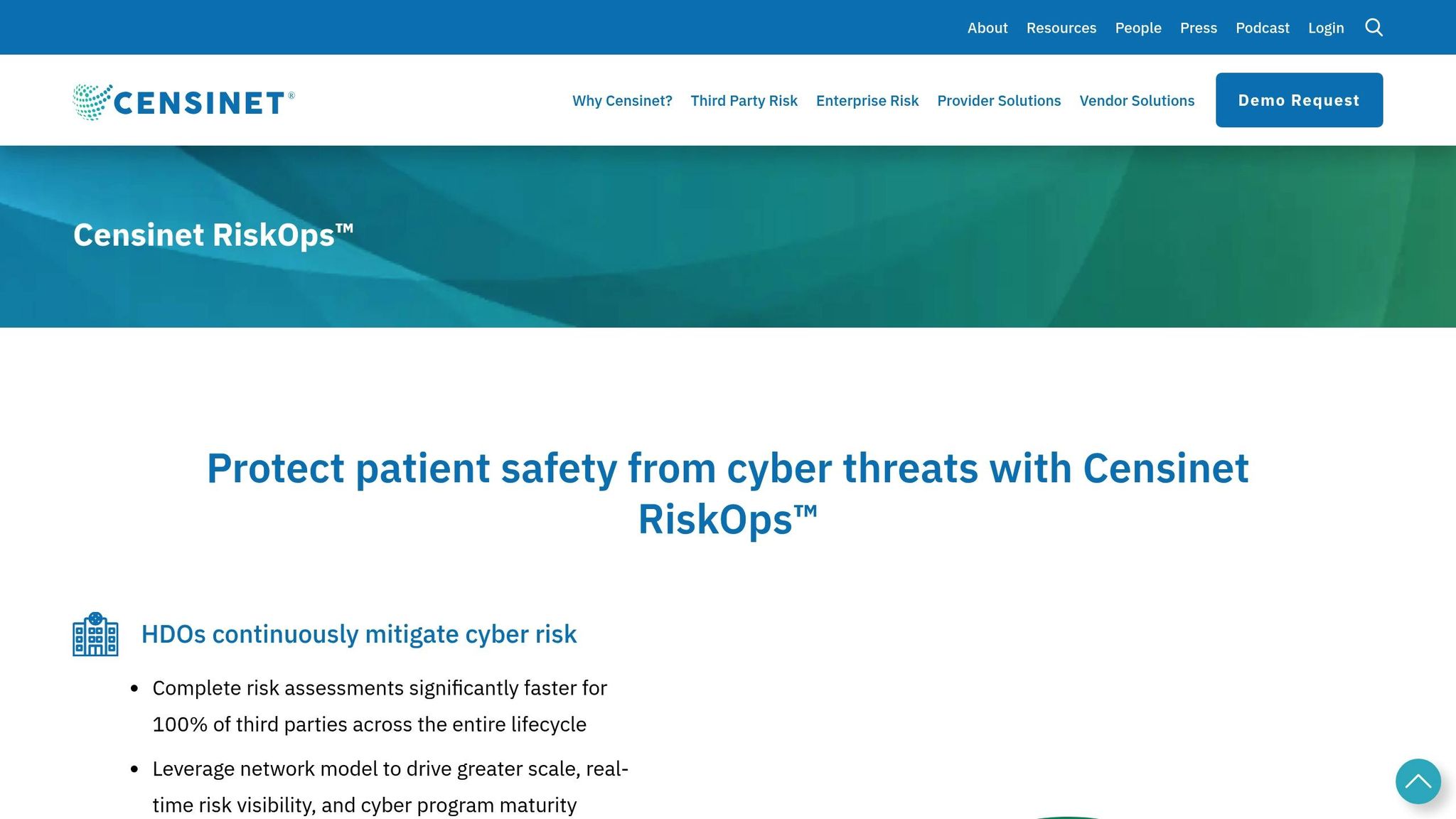
Censinet RiskOps™ streamlines enterprise risk management for HIPAA compliance and AI oversight by automating workflows. It uses standardized questionnaires aligned with the NIST AI Risk Management Framework to assess AI technologies, ensuring healthcare organizations meet ethical and regulatory benchmarks before deploying AI systems.
The platform identifies gaps through automated action plans, integrating findings into a centralized risk register for efficient decision-making across Governance, Risk, and Compliance (GRC) teams. Real-time dashboards provide continuous monitoring and detailed audit trails across key areas - Govern, Map, Measure, and Manage - offering centralized oversight for AI governance.
Censinet AITM enhances third-party risk management by enabling vendors to complete security questionnaires within seconds. It summarizes vendor documentation, captures integration details, flags fourth-party risks, and generates comprehensive risk summary reports. This "human-in-the-loop" approach maintains critical decision-making by humans while scaling operations, ensuring automation complements rather than replaces human oversight.
Additionally, AI governance dashboards extend the RiskOps™ framework, offering granular, continuous oversight of system interactions.
AI Governance Dashboards for Continuous Oversight
AI governance dashboards build on automated risk management by enabling real-time monitoring and compliance analysis. For example, in February 2025, a surgical robotics firm implemented AI-driven security solutions and machine learning models to detect threats in real time. Using Infrastructure-as-Code (IaC), they automated compliance and tracked system activity for unauthorized access attempts, significantly improving incident response times [14].
These dashboards monitor data lineage and flag anomalies that could indicate re-identification attempts, addressing HIPAA's audit trail requirements [14][16]. Advanced natural language processing (NLP) tools automatically detect, flag, or mask sensitive identifiers - like names and medical record numbers - before data is processed by AI models [16]. Data lineage tracking ensures organizations can trace what data is ingested, how it's used, and where outputs are distributed, preventing protected health information (PHI) from leaking into unauthorized AI systems [15]. With ransomware attacks in healthcare surging by 40% in the 90 days leading up to February 2025, these real-time monitoring features have become indispensable [14].
2026 HIPAA Regulatory Updates and AI Implications
OCR Rules and AI Integration
The Office for Civil Rights (OCR) is making major updates to AI security regulations. A December 2024 Notice of Proposed Rulemaking (NPRM) will require all previously "addressable" security measures to become mandatory by 2026 [9][17]. This includes multi-factor authentication (MFA) and encryption for electronic protected health information (ePHI), whether it's stored or in transit [9][17]. To tackle "Shadow AI" - unauthorized tools used without proper agreements - organizations must now catalog all AI tools, cloud services, and SaaS applications [4][9][17].
The new rules also introduce AI-specific risk assessments to address vulnerabilities like prompt injection attacks, data exposure during training, and inaccuracies in AI-generated outputs [9][3]. Enhanced audit logging requirements mean healthcare organizations must document every interaction involving PHI, including prompts, responses, and file uploads [9][1]. Additionally, business associates will need to complete annual written evaluations of their technical safeguards, conducted by subject matter experts [17].
"The Security Rule modernization expected in 2026 will fundamentally change how healthcare organizations approach AI security... The days of 'we didn't know employees were using that' are ending." – Dr. Amanda Foster, Healthcare Compliance Advisor [9]
The financial risks are significant. In 2025, the maximum annual penalty for HIPAA violations reached $2,067,813 per culpability tier, with individual fines ranging from $137 to $68,928 based on the level of negligence [1][17]. Organizations are also required to establish written procedures to recover lost systems and data within 72 hours [17].
These updates mark a turning point for healthcare compliance, especially as federal and state regulations begin to align.
Preparing for Future Compliance Challenges
In addition to federal changes, healthcare organizations must now address new state-level AI laws. Starting January 1, 2026, states like Illinois, California, and Texas will require disclosure of AI use in diagnoses and offer patients "human-centered" alternatives [4]. Meanwhile, the Colorado AI Act, effective June 2026, adds requirements to prevent algorithmic discrimination [1].
To stay ahead, organizations should immediately inventory all AI tools in use, including those implemented without formal IT approval [9]. Alarmingly, 40% of healthcare vendor contracts are signed without prior security reviews, and 35% of cyberattacks in the sector stem from third-party vendors [9]. Yet, only 31% of healthcare entities actively monitor their AI systems [3].
Key steps include updating Business Associate Agreements (BAAs) to address AI-specific issues like training data usage, data retention for prompts and outputs, and involvement of sub-processors [9][1]. Organizations should also deploy AI security measures like Cloud Access Security Brokers to detect and redact PHI before it reaches external AI models [9][1]. Furthermore, implementing "human-in-the-loop" protocols ensures manual clinical verification of AI-generated diagnoses, dosages, or summaries before they are entered into electronic health records [4].
Organizations that adopt recognized AI security practices early - such as those outlined in the NIST AI Risk Management Framework - can benefit from the HIPAA Safe Harbor law passed in 2021. This law gives OCR the discretion to reduce penalties for entities that demonstrate the use of "recognized security practices" [9][3]. Conducting annual mock audits of AI security controls is another proactive way to prepare for OCR enforcement [9][17]. Platforms like Censinet RiskOps™ can help streamline compliance under these new mandates.
"Organizations that can demonstrate they've implemented industry-standard AI security controls - even before explicit requirements - will fare better in enforcement actions." – Dr. Amanda Foster, Healthcare Compliance Advisor [9]
Conclusion
Managing AI risks is a critical aspect of achieving HIPAA compliance. As Joe Braidwood, CEO of GLACIS, explains:
"There is no 'HIPAA certified AI.' HIPAA compliance is not a product attribute - it's an operational state that depends on how AI is deployed, configured, documented, and monitored" [1].
With penalties exceeding $2 million for violations, the financial and operational stakes are high.
The regulatory environment is evolving rapidly. By 2026, all safeguards that were previously optional will become mandatory. Healthcare organizations will need to maintain a detailed inventory of their AI tools and keep comprehensive audit logs for any AI interactions involving protected health information (PHI). Alarmingly, nearly half of healthcare organizations still lack a formal approval process for AI tools, and only 31% actively monitor their AI systems [3]. This gap between what is required and what is currently practiced leaves many organizations vulnerable.
Addressing these challenges requires a balanced approach that combines technical controls with operational oversight. Organizations need to maintain up-to-date inventories of all AI tools handling electronic PHI (ePHI), conduct ongoing risk assessments as AI models evolve, and ensure thorough vendor oversight. Updating Business Associate Agreements to address AI-specific issues - such as how training data is used and the role of sub-processors - is another key step [1][2]. Additionally, integrating a human-in-the-loop approach for clinical decision-making ensures that automation enhances care without compromising safety [3].
FAQs
Do we need a Business Associate Agreement (BAA) for AI tools?
Yes, a Business Associate Agreement (BAA) is necessary when using AI tools that process protected health information (PHI) on behalf of a covered entity. This agreement must be finalized before any PHI is shared with the AI vendor to ensure compliance with HIPAA regulations.
How can we prevent AI from re-identifying de-identified data?
To reduce the risk of AI re-identifying de-identified data, it’s crucial to use robust de-identification techniques that align with HIPAA standards. This includes removing or masking personally identifiable information to ensure compliance.
Beyond that, focus on strong data governance - set clear policies on how data is handled and shared. Regular risk assessments are also key to identifying vulnerabilities. When sharing data, establish formal agreements that define how the data can be used and safeguarded.
Advanced techniques, such as differential privacy, add noise to datasets to protect individual identities. However, these methods may face challenges when applied to healthcare data, where precision is critical.
Ultimately, a layered approach is the best defense. Combine de-identification, privacy-enhancing tools, and continuous monitoring to address AI's ability to link datasets and potentially re-identify individuals.
What AI audit logs are required for HIPAA compliance?
HIPAA requires maintaining detailed audit logs that capture critical information such as user identities, timestamps, actions performed, data accessed or changed, and details of any PHI (Protected Health Information) transfers. These records must be securely stored for a minimum of six years. To ensure their integrity and compliance, tamper-proof methods like cryptographic hashing or WORM (Write Once, Read Many) storage are essential.
