
Healthcare delivery organizations (HDOs) are increasingly adopting cloud solutions to manage patient records, clinical applications, and connected devices. However, this shift expands the attack surface, requiring a structured plan to address risks and meet compliance requirements like HIPAA. A cloud security framework provides a roadmap to secure data, clarify responsibilities between HDOs and cloud providers, and mitigate vendor risks. Here’s what you need to know:
- Why It Matters: Cloud security frameworks help translate regulatory mandates into actionable controls, reducing audit friction and aligning security measures with legal requirements.
- Key Challenges: HDOs must safeguard electronic protected health information (ePHI), manage third-party risks (44.5% of breaches in 2025 stemmed from vendor vulnerabilities), and navigate shared responsibility models across IaaS, PaaS, and SaaS platforms.
- Top Frameworks: NIST CSF 2.0, CSA Cloud Controls Matrix, and HITRUST CSF are widely used in healthcare to address compliance, risk management, and resilience.
- Implementation Tips: Start with a risk assessment, map shared responsibilities, and phase your rollout (e.g., centralize logging in the first 3 months). Use tools like Censinet RiskOps™ for vendor risk management.
The right framework not only ensures compliance but also strengthens patient safety by minimizing downtime and protecting sensitive data.
Cloud Security Frameworks for HDOs: The Basics
What Is a Cloud Security Framework?
A cloud security framework is essentially a set of guidelines designed to help organizations manage cybersecurity risks in cloud environments. Think of it as a roadmap that guides teams on how to protect, monitor, and respond to potential threats [1]. These frameworks are built around four key areas: risk assessment, governance, continuous monitoring, and compliance alignment. For HDOs (Healthcare Delivery Organizations), having a customized framework is crucial to address their specific challenges effectively.
Why HDOs Need a Cloud-Specific Framework
HDOs face unique challenges, such as safeguarding electronic protected health information (ePHI), ensuring uninterrupted patient care, and managing third-party vendors - all while navigating strict regulatory requirements. Modern frameworks, like those incorporating a Zero Trust approach, are particularly suited to these needs. Zero Trust operates on the principle that no access is automatically trusted, which makes it ideal for environments with connected medical devices, remote care systems, and cloud-based vendor tools. This identity-first strategy ensures rigorous verification, aligning perfectly with the diverse and complex cloud services HDOs rely on [1].
Cloud Frameworks vs. General Cybersecurity Policies
While general cybersecurity policies outline broad objectives, cloud security frameworks dive into the specifics of managing cloud-related risks. One area where this distinction becomes clear is the shared responsibility model, which is unique to cloud environments. In traditional on-premises setups, organizations control the entire technology stack. But in the cloud, security responsibilities are split between the organization and the cloud service provider (CSP). Here's how these responsibilities typically break down:
| Cloud Model | Provider Responsibilities | HDO Responsibilities |
|---|---|---|
| IaaS | Physical infrastructure, hardware, network | OS, applications, data security, access management |
| PaaS | Runtime, storage, platform maintenance | Application configuration, data protection, user access |
| SaaS | Software, platform, core security | User permissions, data classification, compliance |
A well-defined cloud security framework helps clarify these roles by creating a clear responsibility matrix. This eliminates confusion, reducing the chances of audit issues or overlooked vulnerabilities [1]. With these roles clearly outlined, HDOs are better equipped to tackle risks associated with third-party vendors and cloud environments.
sbb-itb-535baee
Healthcare Cloud Transformation: AI Readiness, Hybrid Cloud, & Cybersecurity Strategies
Key Criteria for Evaluating Cloud Security Frameworks
When it comes to healthcare delivery organizations (HDOs), choosing the right cloud security framework is more than just checking boxes on a compliance list. It's about addressing the unique challenges of protecting electronic protected health information (ePHI), ensuring uninterrupted care, and managing a complex network of vendors and cloud services. These criteria are essential for tailoring a framework to the specific needs of HDOs.
Core Functions: Risk Identification, Protection, Detection, Response, and Recovery
A robust security framework must span the entire security lifecycle - not just prevention. The NIST Cybersecurity Framework (CSF) 2.0, introduced in 2024, organizes this lifecycle into six key functions: Govern, Identify, Protect, Detect, Respond, and Recover [4]. The addition of the Govern function is a game-changer, as it aligns cybersecurity strategies with broader organizational goals and risk tolerance, moving beyond a purely technical focus.
Each function plays a critical role. Identify ensures you know what assets and vulnerabilities exist. Protect includes safeguards like access controls and data encryption. Detect focuses on catching threats early through continuous monitoring. Respond and Recover define how quickly incidents are contained and operations restored - an especially urgent need in healthcare, where downtime can have life-or-death implications.
"The NIST Cybersecurity Framework (CSF) 2.0 provides guidance to industry, government agencies, and other organizations to manage cybersecurity risks. It offers a taxonomy of high-level cybersecurity outcomes that can be used by any organization - regardless of its size, sector, or maturity." - NIST [4]
As you evaluate frameworks, pay close attention to how they address vendor-specific risks in cloud ecosystems.
Third-Party and Vendor Risk Management
HDOs often depend on numerous third-party cloud services, from electronic health record (EHR) platforms to connected medical devices. This reliance makes managing HIPAA-compliant vendor risks a top priority. A comprehensive framework should integrate vendor risk management into the overall security lifecycle.
Look for frameworks that require third-party attestations like SOC 2 Type II or ISO 27001 certifications instead of relying on self-assessments [2]. The Cloud Security Alliance (CSA) Controls Matrix is particularly helpful, as it maps cloud-specific vendor controls to HIPAA and other standards, allowing a single security measure to meet multiple requirements [1][2]. Tools like Censinet RiskOps™ are specifically designed for healthcare environments, offering structured and scalable vendor risk assessments.
Privacy, Resilience, and Governance Support
Effective frameworks must also tackle privacy, resilience, and governance - essential components for HDOs, especially those operating in hybrid environments that combine cloud and on-premises systems.
The framework should enforce HIPAA-aligned privacy controls while emphasizing operational resilience and governance. NIST CSF 2.0's Govern function is particularly useful for ensuring that cybersecurity is treated as a core element of patient care, not just a technical obligation [1][2][4].
"Develop a comprehensive cybersecurity framework that treats digital protection as an integral component of patient care, not just a technical requirement." - Heights Consulting Group [1]
To measure your organization's progress, consider using NIST CSF Tiers, which range from Tier 1 (Partial) to Tier 4 (Adaptive). These tiers provide a clear way for leadership to assess maturity levels and prioritize investments - without requiring technical explanations in boardroom discussions [4].
Using the NIST Cybersecurity Framework in Healthcare Cloud Environments
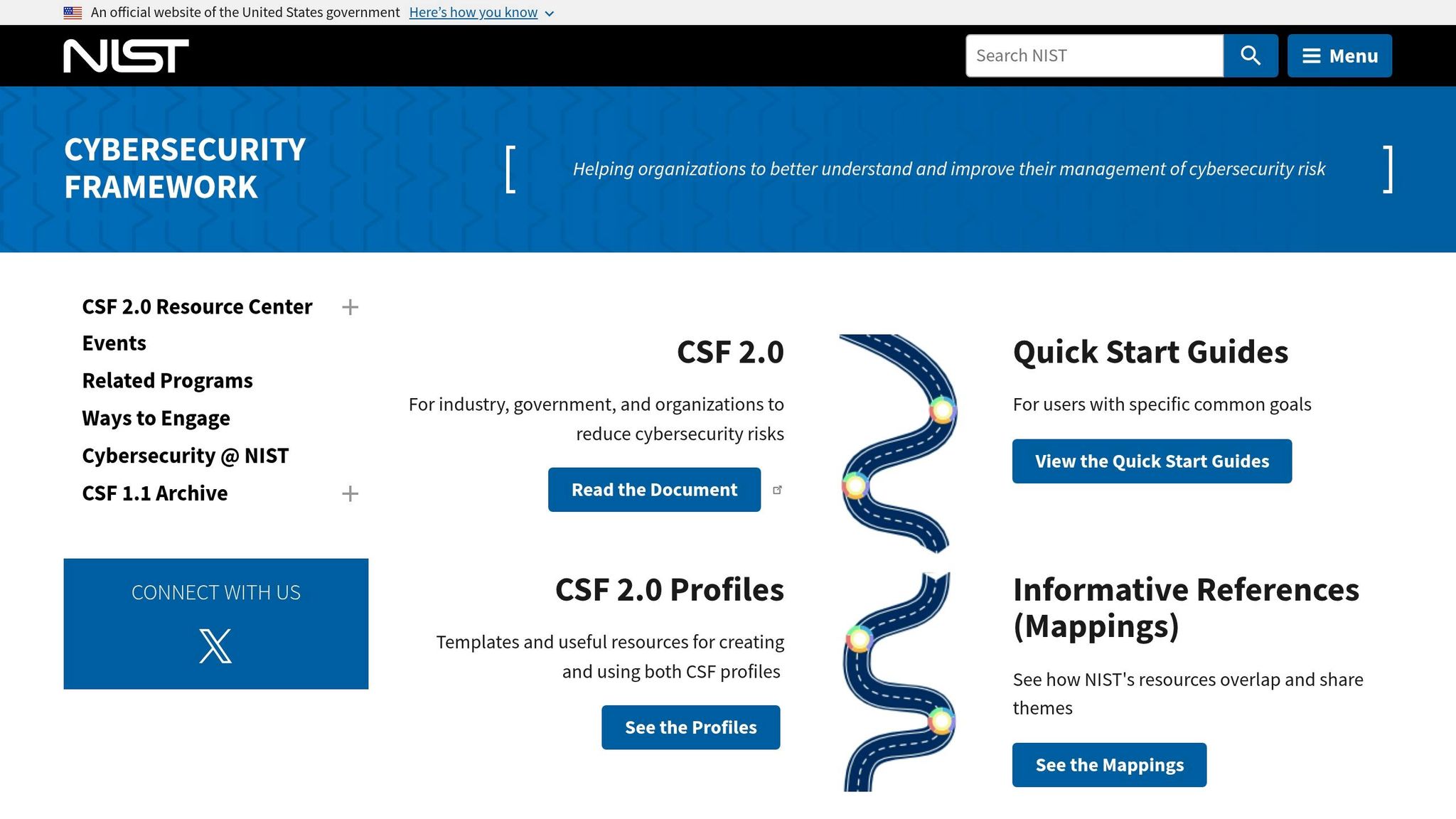
The NIST Cybersecurity Framework (NIST CSF) offers a solid foundation for managing cloud security risks, especially in healthcare. As Heights Consulting Group explains:
"The NIST Cybersecurity Framework represents a premier example of a comprehensive security framework, offering organizations a flexible taxonomy for understanding and managing cybersecurity risks." [1]
This flexibility is crucial for adapting security measures to meet the unique demands of healthcare environments. Instead of imposing a fixed set of rules, the NIST CSF allows organizations to tailor their security strategies based on their specific risks and operational needs.
How NIST CSF Aligns with HDO Needs
The framework’s Identify function is particularly important for healthcare delivery organizations (HDOs). It requires them to inventory all cloud assets - whether it’s AWS accounts, Azure subscriptions, or SaaS applications. This is critical in healthcare, where clinical teams often adopt cloud tools without IT oversight, potentially leaving sensitive patient data exposed.
The Protect function addresses key risks in healthcare cloud environments. For instance, by 2025, 54% of cloud data is expected to be classified as sensitive, but only 8% of organizations encrypt 80% or more of their data [3]. In healthcare, these protections are vital to securing electronic protected health information (ePHI) and mitigating risks from misconfigured access. Excessive permissions, which accounted for 31% of cloud-related breaches [3], highlight the importance of practices like multi-factor authentication and least-privilege access.
The Detect, Respond, and Recover functions round out the framework by ensuring continuous monitoring and incident response. In healthcare, where ransomware can disrupt surgeries or delay medication delivery, the ability to quickly isolate compromised cloud workloads is essential - not just for IT, but for patient safety.
While these functions focus on internal security, extending protections to third-party vendors is equally critical.
Applying NIST CSF to Third-Party Cloud Vendor Risk
Once HDOs establish a strong internal security posture, they need to address risks associated with third-party cloud vendors. The Govern function within NIST CSF helps lay the foundation by defining clear policies, accountability structures, and risk tolerance for vendor relationships. Ideally, these expectations should be set before signing contracts or deploying new systems.
A practical tool for this process is a Managing Vendor and Third-Party Responsibilities matrix. This tool helps map security responsibilities across different cloud service models - whether Infrastructure as a Service (IaaS), Platform as a Service (PaaS), or Software as a Service (SaaS). Without this clarity, compliance gaps are almost unavoidable.
After defining responsibilities, HDOs can use NIST CSF Organizational Profiles to document their desired security outcomes and evaluate whether a vendor’s controls meet those standards. Independent attestations like SOC 2 Type II reports can provide evidence of a vendor’s compliance. Tools like Censinet RiskOps™ streamline this process by offering scalable vendor assessments tailored for healthcare. Additionally, combining NIST CSF with the Cloud Security Alliance (CSA) Cloud Controls Matrix helps map outcomes to specific technical controls, ensuring alignment with HIPAA, SOC 2, and cloud-specific requirements.
Healthcare-Specific Considerations for Cloud Security and Vendor Risk
Managing Vendor and Third-Party Risks in Cloud Services
In healthcare cloud environments, vendors play a critical role. From EHR systems to medical devices and billing platforms, each vendor connection introduces potential security risks. That’s why setting clear expectations before signing any contract is crucial for Healthcare Delivery Organizations (HDOs).
Every cloud agreement should include a Business Associate Agreement (BAA) to outline how the vendor will protect electronic protected health information (ePHI). Beyond the BAA, contracts should also specify technical requirements like immutable logging - for example, using tools such as AWS CloudTrail or Azure Activity Logs - with defined retention periods. These logs are essential for maintaining audit trails and conducting incident investigations.
It’s also important to clearly outline the responsibilities of both the vendor and the HDO. As Opsio points out:
"Frameworks do not replace laws and regulations; they help operationalize compliance." [2]
HDOs shouldn’t just rely on a vendor’s assurances. Instead, they should demand independent third-party attestations like SOC 2 Type II reports, ISO 27001 certifications, or CSA STAR assessments. These certifications provide evidence that the vendor’s security controls are effective. Platforms like Censinet RiskOps™ are specifically designed to help HDOs manage vendor risks, enabling structured and scalable assessments across a wide range of vendors.
However, vendor and technical controls are just one piece of the puzzle. Healthcare cloud environments also face broader operational and financial risks.
Operational and Financial Risks in Healthcare Cloud Environments
Adopting cloud solutions in healthcare brings more than just security concerns - it also introduces significant operational and financial challenges. For example, a ransomware attack targeting a cloud-hosted EHR system can disrupt surgeries, delay medication deliveries, and force staff to fall back on paper-based processes. These disruptions don’t just slow operations; they pose direct risks to patient safety and create substantial financial losses.
Supply chain vulnerabilities make these risks even more complex. A flaw in a third-party system - whether it’s a connected medical device or a legacy system integrated via API - can ripple through the entire HDO environment. To mitigate this, HDOs need to evaluate risks from fourth-party vendors as well.
"Cloud misconfiguration and weak governance are leading causes of breaches and noncompliance." [2]
To shift from reactive to proactive risk management, HDOs can use a combination of frameworks. For instance, HIPAA covers regulatory requirements, NIST CSF provides a structure for managing risks, SOC 2 validates vendor security, and the CSA Controls Matrix maps out technical controls. Together, these frameworks create a multi-layered defense that addresses compliance needs while tackling real-world risks.
Governance is another key factor. Policies should assign clear accountability for monitoring vendor compliance, specifying who is responsible and how often assessments occur. This ensures that oversight remains consistent and effective over time.
How to Choose and Implement the Right Framework for Your HDO

Cloud Security Framework Implementation Roadmap for Healthcare Organizations
Assessing Your Cloud Maturity and Risk Profile
Understanding your current cloud maturity is a key step when choosing a security framework for your HDO. Before making any decisions, take a hard look at where your organization stands today. Start by pinpointing the types of data you handle - like PHI (Protected Health Information) and PII (Personally Identifiable Information) - since the kind of data you process determines which regulations apply, such as HIPAA or CCPA [2].
Your cloud service model also plays a big role. Whether you're using IaaS, PaaS, or SaaS, it's critical to establish a clear shared responsibility matrix. This helps close any compliance gaps that might otherwise go unnoticed until an audit or, worse, a security incident [1].
Next, perform a gap assessment. Compare your current controls against your desired security outcomes. This will help you prioritize what needs attention first, instead of trying to fix everything at once [2].
Once your risk profile is clear, the NIST Cybersecurity Framework (NIST CSF) can serve as a flexible foundation to build on.
Starting with NIST CSF and Adding Healthcare-Specific Requirements
After defining your risk profile, the NIST CSF is a solid starting point for most HDOs. It’s designed to align well with healthcare needs, addressing everything from EHR system protection to managing IoMT devices.
"The NIST Cybersecurity Framework (CSF) 2.0 offers a taxonomy of high-level cybersecurity outcomes that can be used by any organization - regardless of its size, sector, or maturity - to better understand, assess, prioritize, and communicate its cybersecurity efforts." - NIST [4]
To guide your implementation, document both your current security posture and your target goals. HIPAA outlines what you’re legally required to protect, while HITRUST CSF integrates HIPAA, NIST, and ISO standards into a single, auditable framework. This simplifies the process for HDOs that need to demonstrate strong security practices to payers or large health systems [5].
"HIPAA defines what you must protect; HITRUST shows it with certifiable, harmonized controls; NIST CSF guides how to prioritize and measure outcomes." - Kevin Henry, AccountableHQ [5]
A practical approach is to create two NIST profiles: a Current Profile to reflect your existing security measures and a Target Profile to outline where you need to be to ensure PHI protection and clinical resilience. The gap between these profiles becomes your roadmap for implementation [4].
A Phased Approach to Framework Implementation
Rolling out a security framework works best when done in phases:
| Timeframe | Focus Area | Actions |
|---|---|---|
| 0–3 months | Foundation | Build a shared responsibility matrix; implement CIS Baseline controls; centralize logging (e.g., CloudTrail, Azure Activity Log) |
| 3–12 months | Operationalization | Map controls to cloud configurations; deploy automated compliance checks (CSPM); conduct a gap assessment |
| 12+ months | Assurance & Maturity | Seek HITRUST r2 or ISO 27001 certification; perform third-party assessments; conduct tabletop exercises for ransomware and PHI breach scenarios |
Leverage tools like AWS Config and Azure Policy for real-time compliance monitoring. According to Gartner, these tools can significantly cut down on audit time and reduce the manual workload [2].
When it comes to vendor risk management, platforms like Censinet RiskOps™ can help scale assessments across multiple vendors. This ensures consistent oversight without overwhelming your risk team as your framework evolves.
"A converged approach - NIST CSF for strategy, HICP for prioritized practices, and HITRUST for assurance - lets you prove security effectiveness, reduce risk, and meet stakeholder expectations without duplicative effort." - Kevin Henry, AccountableHQ [6]
This phased rollout not only ensures a smoother implementation but also sets the groundwork for ongoing flexibility and growth in your cybersecurity strategy.
Conclusion: Key Takeaways for HDOs
Picking the right cloud security framework is more than a technical decision - it's a commitment to safeguarding patients, sensitive data, and healthcare operations. For healthcare delivery organizations (HDOs), the stakes are incredibly high. A security breach doesn't just impact finances; it can disrupt patient care.
A layered approach is essential to balance regulatory compliance with practical security measures.
Start by addressing HIPAA requirements, then strengthen your governance using frameworks like NIST CSF. From there, incorporate cloud-native controls such as CIS Benchmarks or the CSA Cloud Controls Matrix. As your security program evolves, certifications like HITRUST or ISO 27001 provide verifiable assurance to patients, partners, and regulators about your commitment to security [5].
"Develop a comprehensive cybersecurity framework that treats digital protection as an integral component of patient care, not just a technical requirement." - Heights Consulting Group [1]
Successful implementation hinges on two critical factors: defining a shared responsibility matrix with your cloud service providers and adopting continuous monitoring instead of relying solely on periodic audits. Automated tools, such as CSPM solutions, can reduce manual effort while identifying compliance gaps before they escalate into incidents [2].
For HDOs aiming to simplify this multi-layered process, solutions like Censinet RiskOps™ bring together automated compliance checks and collaborative risk management, making it easier to centralize and streamline cloud security efforts.
FAQs
Which framework should my HDO start with?
Start with the NIST Cybersecurity Framework (CSF) to establish a flexible, risk-focused approach for managing threats. This framework helps organizations effectively identify, protect, detect, respond to, and recover from potential risks.
For healthcare-specific compliance, the HITRUST CSF is a key addition. It combines requirements from multiple standards, including HIPAA and NIST, to address the unique challenges of protecting patient data and meeting regulatory obligations.
To simplify the process, leverage tools like Censinet RiskOps™. This platform can help streamline assessments, automate risk management tasks, and provide clear visibility into the security of patient information and clinical applications.
How do we document cloud shared responsibility for audits?
To ensure shared responsibility for audits is well-documented, it's crucial to clearly outline the security roles between your cloud provider and your healthcare organization. Typically, the provider manages infrastructure security, while your organization is responsible for securing data, applications, and access.
Here’s how to stay on top of compliance:
- Use automated audit logs to track activities.
- Continuously monitor system activity involving ePHI (electronic Protected Health Information).
- Retain all audit records for a minimum of six years, as required.
Additionally, align your controls with regulatory standards, maintain a detailed workload ownership map, and centralize all audit evidence. These steps help streamline compliance and ensure nothing falls through the cracks.
What vendor evidence should we require to protect ePHI?
To keep electronic Protected Health Information (ePHI) secure, Healthcare Delivery Organizations (HDOs) must insist on a signed Business Associate Agreement (BAA) from any vendor that handles sensitive data. This agreement ensures the vendor understands and accepts their responsibility for safeguarding the information.
Beyond the BAA, vendors should demonstrate their security readiness through certifications such as HITRUST CSF, SOC 2, or ISO 27001. These certifications show that the vendor has met established security and compliance standards.
HDOs should also request detailed technical documentation to verify the vendor’s security practices. Important items to review include:
- Encryption protocols: Look for AES-256 encryption for data at rest and TLS 1.2 or higher for data in transit.
- Penetration testing reports: Regular assessments to identify and address vulnerabilities.
- Access logs: Records of who accessed the data, when, and for what purpose.
- Change management records: Documentation of system updates and changes to ensure they were handled securely.
By requiring these measures, HDOs can better protect sensitive health information from breaches and unauthorized access.
