
Vendor risks in healthcare are a growing concern. 31% of cyber insurance claims in 2024 were linked to third-party issues, and breaches involving vendors cost an average of $4.88 million - far higher than internal breaches. To protect patient data and meet regulations like HIPAA, healthcare organizations must implement structured vendor risk management practices.
Here’s what you need to focus on:
Automation tools like Censinet RiskOps™ can streamline these processes, helping you manage risks efficiently while maintaining compliance. With tighter regulatory scrutiny and rising vendor-related incidents, robust documentation and proactive risk management are essential for protecting patient trust and ensuring operational continuity.
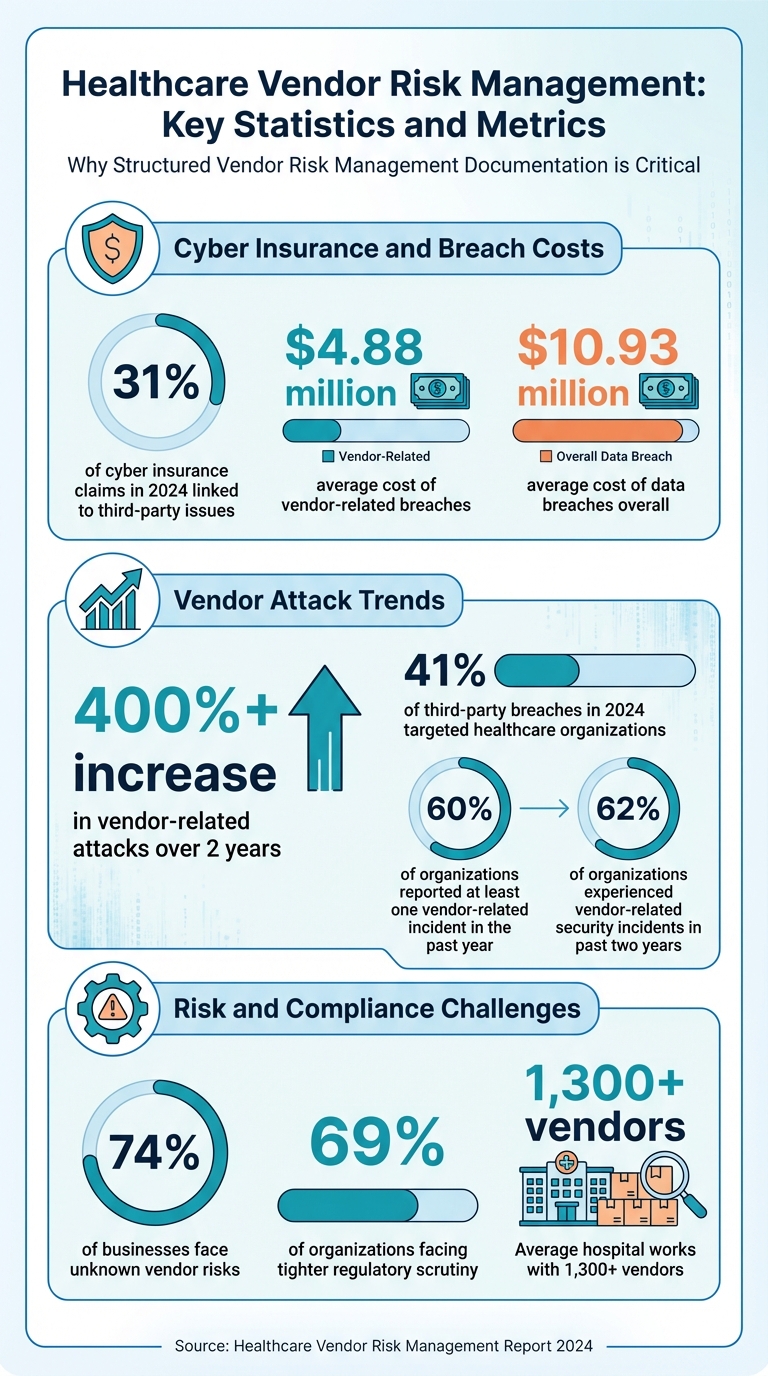
Healthcare Vendor Risk Management Statistics and Key Metrics 2024
Key Elements of Vendor Risk Management Policies
A solid vendor risk management policy should clearly outline critical standards such as access control, encryption, incident response, business associate management, employee training, device controls, and audit monitoring [1]. These elements form the foundation of your compliance strategy and set clear expectations for both your internal teams and external vendors.
Your policy should align with established frameworks like the NIST Cybersecurity Framework (NIST CSF 2.0), HIPAA Security Rule, and ISO 27001 [1]. For example, in August 2025, Adobe’s Vendor Security Review Program highlighted this approach by requiring ISO 27001 certification and SOC 2 Type II compliance for medium- and high-risk vendors. They also implemented continuous scanning and annual security reviews to ensure ongoing compliance [2].
A well-structured governance framework is equally important. This should define roles and responsibilities for risk management activities, assign risk owners, and outline procedures for tracking mitigation plans [1]. Additionally, the policy should establish the program’s scope by identifying the systems and data involved, applicable regulations, and the organization’s risk tolerance. This clarity ensures consistent decision-making about which vendors require closer scrutiny and what controls are needed based on risk levels [1]. Once these foundations are in place, the next step is to develop a detailed vendor inventory and classification system.
Vendor Inventory and Classification
Begin by cataloging every third party that interacts with your systems, applications, or data. This includes major partners like EHR vendors and cloud service providers, as well as smaller vendors like medical device manufacturers, billing services, and office suppliers with network access. Be sure to document each vendor’s name, the services they provide, the extent of their data access, contract terms, and key contacts [1].
After compiling your inventory, classify vendors based on factors such as access to PHI (Protected Health Information), the sensitivity of the data they handle, and their operational importance [3]. For instance, a vendor responsible for critical EHR functionality with direct PHI access would be classified as high-risk, while a vendor supplying office furniture with no system access would be low-risk. Use this classification to schedule regular reviews - annual assessments for low-risk vendors and quarterly or semi-annual reviews for high-risk or critical vendors [3].
Risk Assessment and Scoring Framework
A robust risk assessment framework turns subjective evaluations into measurable, actionable data. Use a likelihood-impact scoring system with weighted factors that account for cybersecurity, business continuity, and compliance risks. This approach allows you to assign numerical values to vendors, making it easier to prioritize them [3]. The framework should include key components like an asset inventory (cataloging systems, applications, and data repositories), vulnerability identification, threat evaluation, and a gap analysis to compare your current security measures against regulatory requirements and best practices [1].
Create a visual risk matrix by mapping risk likelihood against impact. This matrix helps guide your response strategies: low-risk items can be monitored, medium-risk items may require targeted controls and periodic reviews, and high-risk items demand immediate action or even vendor replacement [3].
To validate vendor controls, rely on certifications, audit reports, and detailed documentation. With data breaches now averaging $10.93 million [1], thorough and consistent vendor assessments are more critical than ever.
Standard Vendor Risk Management Procedures
Standardized vendor procedures are essential for shielding your organization from growing threats. With vendor-related attacks surging by over 400% in just two years[2], and 41% of third-party breaches in 2024 targeting healthcare organizations[6], having a structured approach is no longer optional - it’s a necessity for maintaining security.
A comprehensive vendor management framework should address all phases of the vendor lifecycle: onboarding, continuous monitoring, and secure offboarding. Each step requires thorough documentation to ensure consistency. For instance, hospitals often work with over 1,300 vendors[6], making systematic procedures the only viable way to handle such complexity. This process not only ensures smoother operations but also strengthens security at every stage.
Focus extra attention on high-impact vendors by conducting more frequent reviews and applying stricter controls[2][6].
Initial Vendor Due Diligence
Every vendor relationship should begin with a detailed evaluation. Request and verify critical documentation, such as SOC 2 Type II reports, HITRUST certifications, ISO 27001 compliance, and PCI DSS attestations, when relevant[2][5]. For medical device suppliers, ask for a Manufacturer Disclosure Statement for Medical Device Security (MDS2) to assess potential vulnerabilities in their devices[5].
To streamline these evaluations, establish clear scoring criteria and risk thresholds[2]. Additionally, don’t overlook fourth-party risks - ask vendors about their subcontractors and how they ensure security throughout their supply chain[2].
Compliance should be a non-negotiable requirement. Vendors that fail to meet regulatory standards should not be considered, even if they offer cost savings[7]. Prioritize security over price, especially when dealing with vendors who handle electronic protected health information (ePHI). For these vendors, execute a Business Associate Agreement (BAA) that outlines security measures, breach notification protocols, subcontractor management, and procedures for data return or destruction at the end of the contract[5][7].
Once a vendor is onboarded, ongoing monitoring becomes essential to maintain security.
Ongoing Vendor Monitoring
Vendor security isn’t a one-and-done task - it requires continuous attention. Ensure vendors provide updated security certifications, such as annual SOC 2 Type II reports, HITRUST certifications, and ISO 27001 audits[2].
Develop a Plan of Action and Milestones (POA&M) to track and address any risks identified during the relationship[6]. This document helps ensure issues are resolved promptly and assigns clear accountability. Schedule regular risk reviews based on the vendor’s risk classification - conduct quarterly assessments for high-risk vendors and annual reviews for lower-risk partners[3].
When it’s time to end a vendor relationship, follow a detailed offboarding checklist. This should include revoking access permissions, changing passwords, deactivating physical badges, removing access to network resources, and confirming the destruction of any patient records[2][6]. Document every step to ensure compliance and eliminate any lingering access that could pose a threat.
Ready-to-Use Templates for Healthcare Vendor Risk Management
Once you've established clear policies and procedures, ready-to-use templates can simplify your vendor risk management process. These templates help standardize how vendors are assessed, removing uncertainty and creating consistency. Considering that 74% of businesses face unknown risks [8], templates turn subjective judgments into structured, repeatable evaluations across your vendor portfolio.
Vendor Risk Assessment Questionnaire Template
A well-designed questionnaire should cover key areas like the vendor's company profile, operational history, services offered, and primary contacts [8][9]. To ensure a thorough evaluation, include sections on operational capacity and scalability to determine if the vendor can handle both current and future demands without sacrificing quality [9]. Dive deeper into service level agreements (SLAs) by asking about customization options, penalties for non-compliance, and performance metrics [9]. Additionally, incorporate questions about communication and support, such as response times, customer support availability, and designated points of contact [9].
For assessing risk, a simple likelihood × impact formula works well to classify risks into tiers - Critical, High, Medium, or Low [10][3]. This method takes subjective assessments and converts them into measurable data. For vendors handling sensitive information like electronic protected health information (ePHI), include targeted questions about HIPAA compliance, encryption practices, and breach notification protocols.
Once risks are identified, document them in a risk register to ensure vulnerabilities are addressed effectively.
Risk Register and Mitigation Tracker Template
A risk register helps you track each identified risk by including details like severity, assigned owner, and deadline [10]. Add columns for the initial risk score, mitigation actions, progress updates, and the residual risk after remediation. This structured approach not only ensures accountability but also prevents important tasks from slipping through the cracks - especially crucial when 60% of organizations reported at least one vendor-related incident in the past year [4].
For high-risk vendors, set up escalation triggers, such as automatic alerts to leadership if breaches or significant issues arise [10][3]. Document all findings, decisions, and mitigation efforts to maintain a complete audit trail. Regular reviews should be scheduled based on the vendor's risk tier - quarterly for high-risk vendors and annually for lower-risk ones [10][3].
"Regulators don't expect perfection. They expect evidence that breaches were contained, reported, and lessons embedded." – Neotas
With risks tracked and managed, the next step is to standardize how vendors are evaluated.
Vendor Evaluation Scorecard Template
A scorecard brings consistency to vendor evaluations by focusing on security, compliance, and operational performance [3]. Tailor the depth of the review to the vendor's risk level: conduct comprehensive assessments for high-risk vendors and quicker, streamlined reviews for low-risk ones [3]. Use weighted categories that align with your organization's priorities to ensure evaluations are objective and data-driven.
These templates make vendor risk management actionable and auditable, turning your framework into a practical, effective process for evaluating and managing vendors.
sbb-itb-535baee
Using Censinet RiskOps™ to Automate Vendor Risk Management Documentation
Managing vendor risk documentation manually can quickly spiral out of control as your portfolio grows. That's where Censinet RiskOps™ steps in, automating workflows and centralizing all documentation into one streamlined system. Designed specifically for healthcare organizations, the platform acts as a command center, bringing together assessments, policies, and mitigation tracking. This unified setup integrates seamlessly with existing processes, making it easier to enforce policies and maintain oversight.
Censinet RiskOps™ Features for Policy and Procedure Automation
Censinet RiskOps™ takes the headache out of documentation with automated workflows that guide vendors through completing questionnaires and submitting necessary evidence. Its Censinet Connect™ feature standardizes vendor risk assessments, automatically filling out risk registers and evaluation scorecards. This not only minimizes repetitive data entry but also reduces the risk of human error.
The platform's Censinet AI™ goes a step further by automating security questionnaires and summarizing evidence. It captures crucial details like product integration points and fourth-party risk exposures, making it easier to generate thorough risk summary reports. These reports are essential for maintaining compliance during audits, ensuring healthcare organizations have all their documentation in place.
At its core, the platform's command center consolidates assessment findings, tracks compliance, and monitors mitigation progress. This centralized view allows risk teams to quickly spot vendors that need attention, stick to remediation timelines, and create audit-ready reports - all without the hassle of manual data consolidation. By combining automation with scalability, the platform helps organizations manage vendor risk efficiently.
Scaling Vendor Risk Management with AI and Human Oversight
Censinet AI™ is built with a "human-in-the-loop" approach, ensuring a balance between automation and critical oversight. While the AI takes care of routine tasks like validating evidence and drafting policies, risk teams maintain control through customizable rules and review processes. This oversight is crucial for managing risks that could directly affect patient safety and care delivery.
Think of it like an air traffic control system: the platform routes critical assessment findings and tasks to the right stakeholders for review. This ensures that Governance, Risk, and Compliance teams get timely alerts when high-risk issues arise. With this coordinated approach, your organization can scale its vendor risk management operations without needing to expand your team. By blending AI-driven processes with human oversight, RiskOps™ strengthens your risk assessment framework and keeps your operations running smoothly.
Conclusion and Key Takeaways
Having strong vendor risk management documentation is essential for healthcare organizations, especially during audits and regulatory reviews. With insecure third-party connections responsible for 31% of all cyber insurance claims in 2024 [3] and 62% of organizations reporting vendor-related security incidents in the past two years [11], the risks are too significant to ignore. Templates, policies, and procedures provide a consistent way to evaluate vendors and track remediation efforts effectively across your entire network.
As vendor networks grow, manual processes become harder to manage. That’s where automation steps in to simplify and streamline documentation. Tools like Censinet RiskOps™ offer real-time insights into your risk environment. With features like Censinet AI™, routine tasks - such as completing questionnaires and validating evidence - become more efficient, while still leaving room for the critical human oversight required in healthcare. This blend of automation and human control ensures your risk management efforts scale efficiently without compromising accuracy. Your documentation must also demonstrate that any breaches are handled properly, reported promptly, and that lessons learned are integrated into future processes.
Structured documentation is more than just a regulatory requirement - it’s a powerful tool for managing risk effectively. With 69% of organizations facing tighter regulatory scrutiny, having audit-ready documentation is key to protecting patient data and avoiding penalties. By adopting the frameworks and tools outlined here, you can build a risk management program that not only withstands audits but also strengthens your organization’s overall security posture.
Start by prioritizing high-risk vendors - those who manage sensitive patient data or are critical to your operations. Use standardized templates to maintain consistency, automate processes to reduce manual errors, and keep detailed records of all assessments and remediation actions. With a solid documentation strategy and the right platform, vendor risk management evolves from a compliance task to a strategic advantage, helping to secure your organization while protecting the patients you serve. This approach not only meets compliance requirements but also ensures continuity and safeguards critical data.
FAQs
What are the essential elements of a vendor risk management policy for healthcare organizations?
A solid vendor risk management policy in healthcare starts with clear objectives and scope. It should explain its purpose and specify the types of vendors it applies to - especially those dealing with sensitive information like Protected Health Information (PHI). Additionally, the policy must outline roles and responsibilities to ensure accountability across key departments such as IT, compliance, and procurement.
Important components include risk classification, which helps categorize vendors based on their level of access and potential risks they pose. It should also address compliance requirements, such as certifications and security assessments, to ensure vendors meet necessary standards. Ongoing monitoring is crucial to keep track of vendor performance and ensure they adhere to agreed-upon terms.
The policy should also include incident response procedures to effectively manage any security breaches and a well-defined offboarding process to securely terminate vendor relationships while safeguarding sensitive data. These measures collectively help maintain robust security and compliance in vendor partnerships.
How does Censinet RiskOps™ improve vendor risk management in healthcare?
Censinet RiskOps™ streamlines vendor risk management by automating critical tasks such as risk assessments, ongoing monitoring, and compliance checks. This approach cuts down on manual effort, reduces errors, and provides real-time insights into potential risks within your healthcare supply chain.
With automation at its core, healthcare organizations can dedicate more energy to addressing risks directly, enhancing security measures, and staying aligned with industry regulations - all while conserving valuable time and resources.
Why is it essential to categorize healthcare vendors by risk level?
Categorizing vendors based on risk levels is a key step for healthcare organizations aiming to prioritize their security efforts effectively. This practice not only helps protect sensitive patient information but also ensures compliance with regulations and allows for smarter resource allocation.
By pinpointing vendors that pose higher risks, organizations can take proactive measures to address potential vulnerabilities, lower the chances of data breaches, and protect both their operations and reputation. This strategy plays a critical role in enhancing patient safety and supporting the organization's long-term stability.
