
In today’s rapidly evolving digital landscape, the healthcare sector stands at a critical juncture where innovation and risk intersect. While groundbreaking advancements like organ-on-a-chip models and AI-driven tools promise transformative impacts on patient care, the same technological acceleration is being exploited by cybercriminals to launch sophisticated attacks. This duality - of progress and peril - defines the challenges and opportunities for healthcare cybersecurity professionals today.
This article unpacks the escalating threats of cloud phishing and ransomware, alongside the breathtaking pace of medical and technological innovation, offering actionable insights for healthcare leaders, IT strategists, and cybersecurity professionals.
The Evolving Threat Landscape: Cloud Phishing’s New Frontlines
Weaponizing Trust: The Ingenious Exploitation of Cloud-based Email Systems
Cybercriminals are increasingly shifting their focus from exploiting technical vulnerabilities to targeting trust within legitimate systems. One alarming example highlighted in the discussion involves attackers exploiting a legitimate feature within Google Cloud's email services. By routing phishing emails through Google Cloud’s infrastructure, these messages appear to originate from highly trusted sources, bypassing standard security checks like SPF (Sender Policy Framework) and DKIM (DomainKeys Identified Mail).
Why This Matters: With emails passing through internal systems unchecked, the attack moves past technology barriers and focuses squarely on human error. This tactic underscores the urgency for healthcare organizations to rethink their trust models and focus on educating their workforce against social engineering strategies.
Key Insights:
- Legitimate cloud features can be weaponized for malicious intent, allowing phishing emails to "sail" through security defenses.
- Traditional defenses such as domain-blocking mechanisms are no longer sufficient. Organizations must adopt advanced threat detection systems capable of analyzing behavioral anomalies in trusted services.
The Strategic Shift: Logistics Over Brute Force
The sophistication of modern threats isn’t just about technical prowess; it’s about exploiting operational gaps. Attackers are leveraging the infrastructure’s inherent trust mechanisms to bypass defenses, placing an even greater burden on healthcare organizations to scrutinize their cloud configurations and access controls.
sbb-itb-535baee
Ransomware: A Systematic Campaign Against Healthcare
Covenant Health Breach: The Cost of Operational Risk
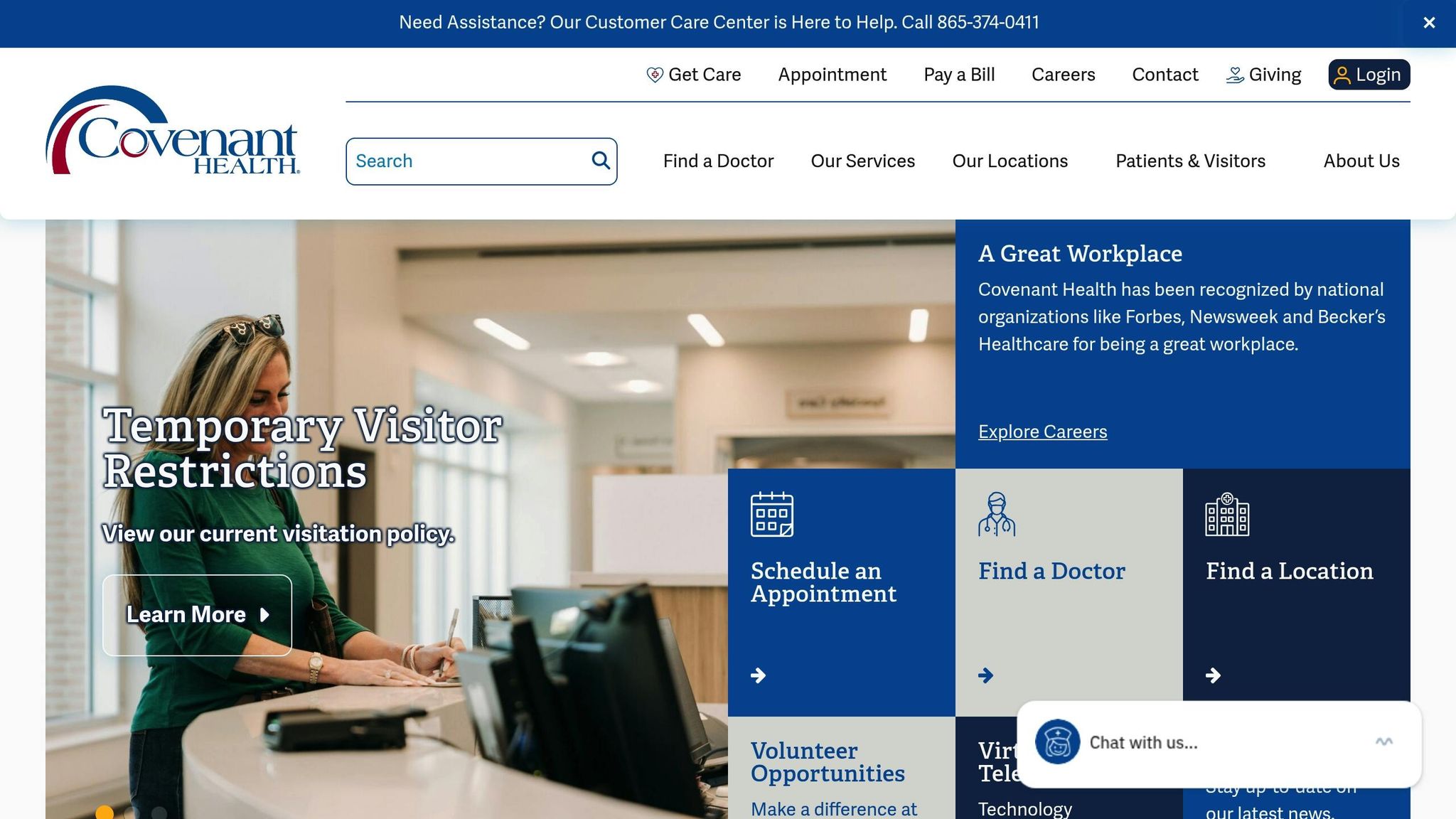
The ransomware siege on healthcare continues unabated, with Covenant Health’s recent breach exposing sensitive personal and medical data of almost 478,000 individuals. This isn’t an isolated incident but part of a broader campaign targeting healthcare delivery organizations (HDOs) and their vendor networks. The breach exemplifies how deeply interconnected healthcare systems have become - and how ransomware attacks can disrupt the entire patient care pipeline.
Operational Impact:
- Beyond data exfiltration, ransomware attacks erode patient trust and introduce significant legal liabilities.
- Forensic investigations and recovery efforts often lag behind, leaving organizations vulnerable to prolonged downtime - crippling healthcare delivery in the process.
Supply Chain Attacks: The Soft Underbelly of Healthcare Security
Ransomware groups are now targeting critical service providers and contractors, as seen in the Sedgwick breach. These vendors often manage aggregated data or handle specialized claims, becoming high-value targets for attackers. A single breach in the vendor network can compromise hundreds of clients, amplifying the fallout.
Takeaway for Healthcare Leaders:
- Supply chain risk must now be treated as a primary vector of attack rather than an ancillary concern.
- Implementing robust vendor risk management programs and continuously monitoring third-party access is crucial.
The Speed of Exploitation: A Race Against Time
Botnets and Zero-Day Vulnerabilities
Threat actors are weaponizing newly disclosed vulnerabilities at a breathtaking pace, leaving organizations with little time to respond. Examples like the Rhonda Docs botnet campaign - which exploits the "React 2 Shell" vulnerability - reveal how attackers execute remote code execution (RCE) attacks without user interaction, instantly compromising servers and connected devices.
Critical Risks:
- Unpatched systems are immediate targets for automated scanning tools.
- RCE flaws enable attackers to deploy malware, cryptocurrency miners, or backdoors for future exploitation.
Firewall Failures: When Gatekeepers Fall
Perhaps the most alarming trend is the targeting of core network defenses like firewalls. The ongoing exploitation of a two-factor authentication (2FA) bypass vulnerability in Fortinet firewalls demonstrates the catastrophic consequences of unpatched systems. With over 10,000 devices still exposed, these flaws act as a master key for attackers, granting unrestricted access to critical infrastructure.
Urgent Actions for IT Leaders:
- Apply available patches immediately.
- Conduct thorough log reviews to detect signs of intrusion.
- Assume breach conditions and develop remediation plans accordingly.
Innovations in Medicine and AI: The Bright Side of Progress
Lung-on-a-Chip: Precision in Medical Research
Amidst these cybersecurity challenges, advancements in health science shine as a beacon of hope. Researchers have developed a functional lung-on-a-chip model using cells from a single donor. This breakthrough allows scientists to study disease progression and drug responses with unprecedented accuracy, potentially paving the way for personalized therapeutics tailored to individual genetic profiles.
Implications for Healthcare:
- Reduced reliance on animal testing and faster drug development pipelines.
- Precision medicine becomes more achievable, improving patient outcomes.
Generative AI: A Double-Edged Sword
Generative AI is rapidly advancing, with Google testing its fastest image-generation model to date. While this efficiency holds promise for medical imaging and diagnostics, it also introduces risks. As generative AI becomes cheaper and faster, the potential for misuse - such as creating deepfakes for social engineering - looms large.
Strategic Considerations:
- Healthcare organizations must explore AI's potential in diagnostics and patient care while addressing the ethical and security challenges it presents.
- Investments in AI governance frameworks are essential to ensure responsible deployment.
Key Takeaways
- Cloud Phishing: Cybercriminals are exploiting trust models within legitimate cloud services, bypassing traditional email security defenses.
- Ransomware: Healthcare organizations face systematic attacks targeting both their systems and vendor networks, with massive operational and reputational risks.
- Supply Chain Risks: Vendors and contractors are becoming prime targets, emphasizing the need for robust third-party risk management.
- Urgency in Patching: Vulnerabilities like the Fortinet 2FA bypass and React 2 Shell are being exploited at an unprecedented speed, requiring immediate action.
- Innovations: Advances like lung-on-a-chip models and next-gen AI tools highlight the transformative potential of technology in medicine.
- Duality of Progress: The pace of innovation in health science must be matched by an equally rapid improvement in cybersecurity practices.
Closing Thoughts
The healthcare sector’s duality - progress on one hand and escalating threats on the other - presents both a challenge and an opportunity. While attackers exploit operational gaps and trust vulnerabilities with increasing sophistication, the industry’s scientific advancements are reshaping patient care in profound ways. To bridge the gap, healthcare organizations must adopt a proactive, precision-driven approach to cybersecurity, aligning their defenses with the sophistication of their innovations.
The question remains: Can the speed and specificity of our defenses match the pace of both threats and breakthroughs? The future of healthcare security depends on it.
Source: "🚨 HEAL Security Dispatch Deep Dive | 02 January 2026 🚨" - HEAL Security, YouTube, Jan 2, 2026 - https://www.youtube.com/watch?v=msloCxd51ew
