
92% of healthcare organizations struggle with Governance, Risk, and Compliance (GRC) integration, leaving them vulnerable to regulatory violations, cybersecurity threats, and data quality issues. Key challenges include outdated systems, siloed teams, and manual processes that can't keep up with the fast pace of regulatory changes.
AI-driven GRC platforms are solving these problems by automating repetitive tasks, providing real-time risk visibility, and improving collaboration across departments. For example, tools like Censinet AI streamline risk assessments, connect fragmented systems, and help healthcare organizations proactively manage risks and compliance.
Key Takeaways:
- Challenges: Legacy systems (47.75%), lack of skilled professionals (45.95%), and siloed data (36.94%) hinder GRC efforts.
- AI Solutions: Automate compliance monitoring, integrate systems, and offer real-time insights for better decision-making.
- Example Tool: Censinet AI simplifies third-party risk assessments and enhances governance with centralized dashboards.
AI isn't just a tool - it's becoming a critical component for healthcare organizations to manage risks effectively and meet ever-changing compliance standards.
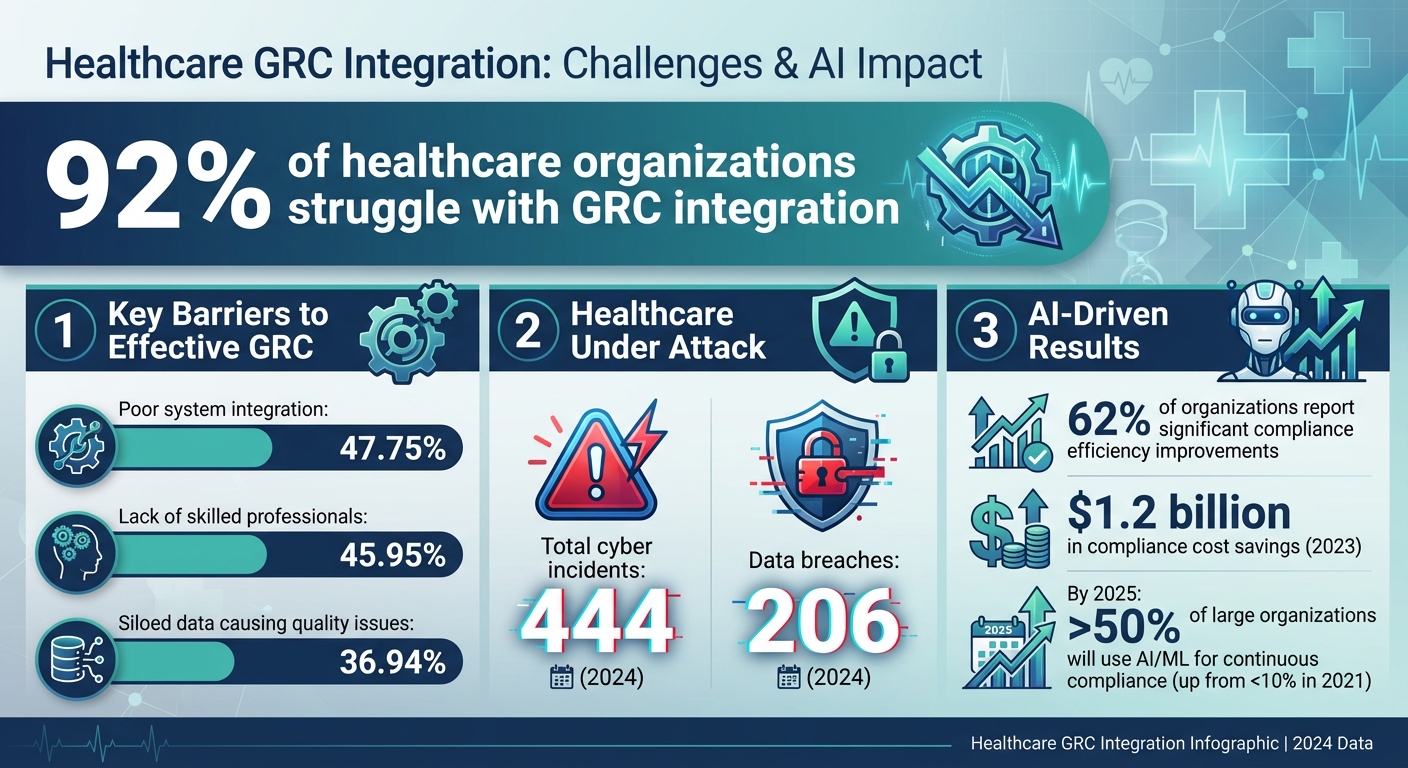
Top Healthcare GRC Integration Challenges and AI Solutions Statistics
Why Healthcare Organizations Fail at GRC Integration
Fragmented Tools and Manual Processes
Healthcare organizations often rely on outdated tools like spreadsheets, email chains, and legacy systems to manage governance, risk, and compliance (GRC). These disconnected systems create inefficiencies, forcing teams into time-consuming, manual workarounds. The numbers tell the story: 47.75% of GRC professionals cite poor system integration, while 36.94% point to siloed data as a major cause of quality issues. Together, these factors undermine risk assessments and erode trust among stakeholders[2].
Legacy platforms make matters worse. Many lack modern architecture or APIs, making seamless data integration nearly impossible. This fragmented data environment increases the likelihood of audit failures and inconsistent risk management, leaving organizations vulnerable.
Disconnected Teams and Poor Communication
Technology isn’t the only barrier to effective GRC integration - organizational silos are just as problematic. GRC success depends on collaboration across departments like clinical, IT, compliance, and legal. Yet, in many healthcare organizations, these teams operate in isolation. This lack of cohesion stifles engagement across the organization[1].
Without clear definitions of roles and responsibilities, policies are applied inconsistently, and training programs often miss the mark, failing to address the unique needs of different job functions[1].
"Compliance professionals are uniquely positioned to bridge the gap between technical teams and patient safety." – Clivetty Martinez, Ph.D., Senior Advisor at Granite GRC[9]
The situation worsens when silos block access to critical data. For example, compliance teams may not receive the information they need from IT, and clinical staff might be excluded from cybersecurity discussions. When teams fail to align, the entire GRC framework suffers, and the potential of AI in improving GRC processes remains unrealized[2].
Reactive Compliance and Cybersecurity Gaps
When healthcare organizations fall short in both technology and collaboration, they often default to a reactive approach to compliance. Instead of proactively addressing risks, many wait until violations, breaches, or audit findings force them to act. This reactive mindset is compounded by a lack of comprehensive incident response plans and regular testing[1][7].
The consequences are alarming. In 2024, the FBI Internet Crime Report recorded 444 cyber incidents targeting healthcare, including 206 data breaches[7]. Third-party vendors and connected medical devices are especially vulnerable, and inadequate security measures in hospital systems - like EHRs, ICU monitoring, and labs - mean a single vulnerability can compromise an entire network[7].
The rapid adoption of AI adds another layer of complexity. While AI offers incredible potential, healthcare organizations are struggling to keep up with the risks it introduces[8]. Manual, reactive approaches simply can’t address these emerging threats. Without proactive monitoring and real-time visibility, organizations remain one step behind, leaving their GRC frameworks exposed. To shift from damage control to prevention, AI-driven oversight is no longer optional - it’s essential.
How AI Fixes GRC Integration in Healthcare
Automating Risk Assessments and Compliance Monitoring
AI is transforming risk assessments and compliance monitoring by handling massive datasets and identifying patterns and vulnerabilities that manual reviews often overlook. Machine learning algorithms play a key role in this process, automatically analyzing evidence, validating documents, and scoring risks. By automating repetitive tasks and filtering out false positives in areas like third-party due diligence and AML/KYC reviews, AI frees up compliance teams to focus on more strategic priorities, such as scenario analysis and addressing high-impact risks[11][12].
In February 2025, Censinet teamed up with AWS to introduce Censinet AI, an integration within its RiskOps platform. This tool speeds up third-party risk assessments by summarizing vendor evidence and documentation automatically, highlighting key product integration details, and generating risk summary reports from relevant data[8]. Ed Gaudet, CEO and founder of Censinet, emphasized the importance of this collaboration:
"Our collaboration with AWS enables us to deliver Censinet AI to streamline risk management while ensuring responsible, secure AI deployment and use. With Censinet RiskOps, we're enabling healthcare leaders to manage cyber risks at scale to ensure safe, uninterrupted care."[8]
Providing Real-Time Risk Visibility
Traditional GRC methods often miss emerging threats between scheduled audits. AI steps in to fill this gap with real-time insights into risk conditions. AI-powered Continuous Controls Monitoring (CCM) systems work around the clock, analyzing activities and compliance metrics to quickly identify deviations or vulnerabilities that could pose risks[10]. For example, in cybersecurity, AI monitors network traffic, endpoint activity, and system logs, flagging threats like malware, phishing, or insider activity by identifying unusual behaviors in real time[10].
AI-driven risk intelligence platforms provide continuous updates to risk assessments, offering early warnings about incidents or changes that could affect the organization[10]. In third-party risk management, AI keeps tabs on suppliers, partners, and vendors, monitoring factors like compliance, financial stability, cybersecurity readiness, and reputational risks. This proactive approach ensures healthcare organizations can address potential issues before they escalate, moving away from the reactive damage control that leaves them exposed.
Improving Team Collaboration with AI Orchestration
Real-time risk insights naturally strengthen collaboration across teams. AI-powered automation connects workflows across departments, breaking down silos and fostering the transparent communication required for effective GRC integration[13]. For instance, Censinet AI routes critical assessment findings and tasks to the right stakeholders, ensuring continuous oversight and accountability[8].
Centralized dashboards, powered by AI, consolidate cybersecurity data, enabling compliance and IT teams to respond to threats more efficiently and in sync[1]. Additionally, AI simplifies the complexity of regulations, translating technical and lengthy rules into plain, understandable language. This clarity enhances communication across diverse teams[5]. By offering real-time insights and analytics, AI helps teams track risk trends, evaluate control effectiveness, and identify compliance gaps. The result? Better decision-making, alignment with strategic goals, and a shared understanding of priorities across the organization[13].
sbb-itb-535baee
How Censinet Closes the GRC Integration Gap

Censinet RiskOps™: Tailored for Healthcare
Healthcare organizations face a unique set of challenges when it comes to governance, risk, and compliance (GRC). Censinet RiskOps™ is designed to tackle these specific needs by centralizing the management of risks associated with patient data, protected health information (PHI), clinical applications, medical devices, and supply chains. This platform simplifies third-party and enterprise risk assessments while ensuring compliance with healthcare-focused standards like HIPAA and HITRUST.
By consolidating risk management activities into a single, unified platform, Censinet RiskOps™ enables risk, compliance, and IT teams to work collaboratively using shared data and insights. This approach leads to faster decision-making, clearer accountability, and a comprehensive view of an organization's cybersecurity posture. The platform also incorporates AI-driven automation, paving the way for more efficient operations.
AI-Powered Precision with Censinet AITM
Censinet AITM brings speed and accuracy to third-party risk assessments, addressing some of the most persistent bottlenecks in healthcare GRC processes. With its AI-powered capabilities, vendors can complete security questionnaires in seconds. The system automatically summarizes vendor evidence and documentation, records critical integration details, and identifies potential fourth-party risks. Additionally, it generates comprehensive risk summary reports based on all relevant assessment data.
This level of automation not only minimizes risk exposure but also cuts operational costs. Industry research highlights that 62% of organizations have seen significant improvements in compliance efficiency thanks to AI solutions[3]. In fact, AI-driven regulatory technology (RegTech) was expected to save businesses approximately $1.2 billion in compliance-related expenses by 2023[3]. For healthcare organizations managing extensive vendor networks, these efficiency gains directly translate into tangible value.
While speeding up assessments is a key benefit, effective AI governance is equally important for sustained risk management.
Governing AI with Censinet AI
As healthcare organizations increasingly adopt AI tools, managing the risks associated with these technologies becomes essential. Censinet AI ensures that AI processes align with broader GRC goals by centralizing governance, risk oversight, and accountability. The platform routes critical findings and tasks related to AI risks to the appropriate stakeholders, including members of the AI governance committee, for review and approval.
A real-time AI risk dashboard serves as a centralized hub, aggregating data on policies, risks, and tasks. This setup ensures that the right teams address the right issues at the right time, maintaining continuous oversight. By combining automation with a human-in-the-loop approach, Censinet AI strikes a balance between efficiency and the human judgment needed for safe and effective healthcare operations. This approach supports both operational scalability and informed decision-making, ensuring healthcare organizations can navigate the complexities of AI with confidence.
Steps to Implement AI-Driven GRC Integration in Healthcare
Assess Your Current GRC Maturity
Start by evaluating your current GRC tools, processes, and the quality of your data. This step helps establish a baseline and identifies where AI can make the biggest difference. Data quality is a key focus - over a third (36.94%) of GRC professionals highlight it as a major hurdle to AI adoption [2]. Check if your data is accurate, complete, and standardized, and review your data governance policies to ensure the information feeding your AI systems is both representative and unbiased [4]. Poor data quality can lead to distorted results and unreliable insights, wasting your AI investment.
Next, assess your compliance reporting and documentation. Are they centralized and clear? Pay attention to elements like data lineage, feature selection, and validation methods. Collaborate with audit, risk, and compliance teams to conduct a joint risk assessment. Standardizing your risk and control taxonomy across departments is also crucial - it helps eliminate silos and fosters better collaboration [14].
Identify High-Impact AI Use Cases
Once you’ve mapped your current GRC maturity, focus on identifying areas where AI can make the biggest impact. Define your GRC objectives and look for opportunities like automating third-party risk assessments, enabling continuous compliance monitoring, or streamlining regulatory reporting. Integration with existing systems is a common challenge, cited by 47.75% of GRC professionals [2].
The potential for AI in compliance is growing rapidly. Gartner projects that by 2025, over half of large organizations will use AI and machine learning for continuous regulatory compliance checks, a sharp increase from under 10% in 2021 [3]. Organizations already using AI report that 62% have achieved noticeable gains in compliance efficiency [3]. Align your AI initiatives with your organization’s priorities and readiness to ensure the best results [2].
Implement a Healthcare-Specific AI-Driven Platform
After identifying high-impact use cases, choose a platform designed specifically for healthcare’s stringent regulatory and operational needs. Generic GRC tools often fall short in this sector. Look for AI-driven platforms that meet healthcare-specific requirements like HIPAA compliance, PHI protection, and robust security features. Prioritize platforms offering transparency, healthcare-focused capabilities, and seamless integration with your current GRC and IT systems [15].
Rather than building separate AI frameworks, embed AI oversight into your existing GRC programs [16]. Apply governance throughout the AI lifecycle, including risk controls, validation checkpoints, and thorough documentation. Continuous, real-time monitoring is essential, and governance responsibilities should be clearly assigned across teams - legal, compliance, audit, data science, and business units all have a role to play [16][17].
Finally, ensure your GRC teams are well-trained to understand AI models, interpret their outputs, and spot anomalies [6]. AI should support human expertise, not replace it [15]. Maintain human oversight in critical workflows while using automation to handle repetitive, high-volume tasks. This "human-in-the-loop" approach ensures AI systems operate effectively while preserving the judgment and expertise necessary for safe healthcare operations.
FAQs
How does AI help healthcare organizations integrate GRC more effectively?
AI is reshaping how healthcare organizations handle GRC (Governance, Risk, and Compliance) by automating tasks that traditionally required significant manual effort. Activities like compliance checks and evidence collection, which are both time-intensive and prone to human error, can now be managed more efficiently. This shift not only saves time but also reduces the likelihood of mistakes.
One standout benefit is real-time risk monitoring, which allows organizations to make quicker, more informed decisions. On top of that, AI offers predictive risk assessments, enabling healthcare providers to identify and address potential vulnerabilities before they escalate. This proactive approach strengthens cybersecurity defenses and minimizes risks.
By simplifying workflows and improving accuracy, AI helps healthcare organizations tighten gaps in their GRC strategies. The result? A more efficient system and stronger alignment with regulatory standards.
What challenges make it difficult for healthcare organizations to integrate GRC effectively?
Healthcare organizations face a tough road when it comes to integrating Governance, Risk, and Compliance (GRC). The challenges are plenty - constantly shifting regulations, outdated manual processes, and the struggle to get departments to collaborate effectively. On top of that, fragmented data systems and the growing complexity of managing risks tied to third parties and vendors only add to the difficulty.
When processes and tools aren't optimized, these hurdles can snowball into inefficiencies, compliance gaps, and a heightened risk of cyber threats. To tackle these issues, organizations need smarter solutions that simplify workflows, improve visibility, and encourage proactive risk management.
Why is it important for healthcare organizations to have real-time visibility into risks?
Real-time risk visibility is a game-changer for healthcare organizations striving to stay ahead of threats and meet compliance requirements. It enables teams to quickly spot and tackle new risks, helping them maintain regulatory compliance and steer clear of hefty penalties or data breaches.
With up-to-the-minute insights, organizations can make smarter decisions, boost their operational resilience, and safeguard sensitive patient information against ever-changing cybersecurity risks. This forward-thinking strategy minimizes disruptions and reinforces their compliance efforts.
Related Blog Posts
- AI-Powered GRC: How Leading Organizations Are Automating Compliance in the Age of Increasing Regulation
- Integrated GRC Frameworks: Breaking Down Silos for Enhanced Organizational Resilience
- “Why Most GRC Tools Fail in Healthcare - And What Comes Next”
- “Rebooting Risk: A New Operating System for Healthcare GRC”
